Why this book exists: we gather constantly, but rarely with enough intention
Meetings, dinner parties, conferences, weddings, funerals, retreats, classrooms and family celebrations fill our lives. Yet many of them feel flat, awkward or forgettable. Priya Parker wrote The Art of Gathering because she believes the problem is not that people no longer want to connect. It is that we rely on inherited formats instead of deciding what a particular group of people needs from a particular moment.
The usual planning questions start too late: Where should we meet? What should we serve? What will the agenda be? Parker wants us to begin further upstream. Why are we gathering at all? What change should this gathering make possible? Once that purpose is clear, choices about guests, place, rules, structure, conversation and endings become easier — and more distinctive.
The book was first published in 2018, before remote and hybrid gatherings became ordinary. Its examples are mostly physical, but its central argument travels well: a meaningful gathering is deliberately designed around people and purpose, not convention or logistics.
Who Priya Parker is (and why it matters)
Parker is a facilitator, strategic adviser and conflict-resolution specialist. She has worked on race relations on American university campuses and on peace processes in the Arab world, southern Africa and India. Her education spans organisational design at MIT, public policy at Harvard Kennedy School, and political and social thought at the University of Virginia.
That background explains the book's unusual range. Parker is interested in far more than event planning. She studies what happens when people with different histories, interests and levels of power enter a room together. Her examples move between family occasions, corporate meetings, community forums, political conversations, conferences and experimental dinners. The common question is always the same: what conditions help this group do something together that it could not do separately?
Her personal history matters too. Growing up between different homes, cultures and belief systems gave her an early education in crossing boundaries and reading the unwritten rules of a room. The book feels like the work of someone who has spent years noticing the invisible architecture of groups.
The thesis in one sentence
Meaningful gatherings do not happen by accident: they happen when a host chooses a sharp purpose, gathers the right people, creates temporary rules and boundaries, and leads the group deliberately from invitation to ending.
The deeper problem: confusing the format with the purpose
Most weak gatherings are not badly organised. They are organised around the wrong thing. We inherit a category — “team meeting”, “birthday dinner”, “conference”, “baby shower” — and then reproduce its standard parts without asking whether they serve the people in front of us.
This is what Parker calls the tyranny of convention. The format begins making decisions on our behalf. A weekly meeting has status updates because weekly meetings always do. A wedding follows familiar rituals because weddings are supposed to. A conference puts experts on a stage and everyone else in rows because that is what a conference looks like. The event may run smoothly while achieving almost nothing that matters.
Parker's alternative is purpose-driven gathering. A purpose is not a category or a vague hope such as “to connect” or “to celebrate”. It should be specific enough to make decisions and exclude attractive distractions. “Celebrate my 50th birthday” is broad. “Bring together the people who have helped me keep expanding, so I can enter the next decade with courage” gives the host something to design around.
This is the book's deeper claim: gatherings are small, temporary worlds. Their boundaries, rituals and rules tell people who belongs, what matters and how to behave. If the host does not shape that world, habit and existing power dynamics will shape it instead.
How the book works: a gathering has an arc
The chapters roughly follow the life of a gathering, from purpose and invitation to hosting, conversation and closure. The ideas work best as one connected system rather than a bag of party tricks.
Start with a disputable purpose
A useful purpose is specific, necessary and open to disagreement. Someone should be able to hear it and say, “That is not what this gathering should be for.” If nobody could object, it is probably too vague to guide anything.
Parker suggests digging beneath the first answer. Why are we holding this meeting? To review the project. Why review it? To identify what is putting delivery at risk. Why together? Because the risks sit between teams and cannot be solved in separate updates. Now the gathering has a job: surface and resolve cross-team risks. That purpose tells you who must attend, what preparation matters and what should not take up time.
Close the door: generous exclusion
A strong purpose creates a boundary. Not everyone should be invited to every gathering, because every additional person changes what the group can say and do. Parker calls this “generous exclusion”: leaving people out not to signal superiority, but to protect the purpose for those inside.
This is uncomfortable because inclusion sounds automatically virtuous. Parker's point is more precise. An invitation list should not be driven by politeness, habit or fear of offence. It should be driven by the gathering's need. Sometimes a smaller group creates honesty. Sometimes a broader mix creates productive difference. The question is not “Who deserves to come?” but “Who does this purpose require?”
Let purpose choose the room
A venue is not a neutral container. A boardroom reinforces hierarchy. A circle removes the safety of hiding in rows. A walk changes the rhythm of conversation. A room that is too large drains energy; one that is slightly tight can create warmth and focus.
Parker argues that the setting should support the behaviour you want. If the purpose is to make a difficult decision among equals, a long table with one dominant head may work against you. If the purpose is intimacy, a cavernous venue may be impressive but emotionally wrong. Choose place after purpose, not before it.
Use generous authority — do not be a “chill” host
One of the book's sharpest arguments is that hosts often confuse warmth with passivity. They do not want to control the room, so they provide food and logistics and then disappear. The result is not freedom. Usually, the loudest people take over, insiders cluster together, and quieter guests are left to fend for themselves.
Parker asks the host to practise “generous authority”: use power visibly in service of the guests and the purpose. Protect the group from domination, drift and boredom. Make introductions that matter. Interrupt someone who is taking too much airtime. Move the conversation when it stalls. Explain why a choice has been made. Authority becomes generous when it serves the experience rather than the host's ego.
Create a temporary alternative world
Every gathering already has rules; most are simply invisible. Existing social habits decide who speaks, what is polite and which topics are off-limits. Parker recommends using explicit “pop-up rules” to create a temporary world better suited to the purpose.
A rule might ask senior leaders to speak last, ban work talk at a team dinner, require stories instead of opinions, or make the first person who checks a phone pay the bill. Good rules are not random gimmicks. They interrupt a default that would otherwise weaken the gathering. Because they are temporary and tied to a clear purpose, people often accept behaviour they would resist as a permanent policy.
The gathering begins before people arrive
Parker calls this stage “priming”. An invitation is not just information about time and place; it is the opening act. Its language signals what kind of experience is coming and what guests will be asked to contribute.
Priming may be as simple as a thoughtful question in the invitation, a small piece of preparation, or a request to bring an object or story. The aim is to help people cross the threshold mentally before they cross it physically. If participants arrive cold and confused, the host spends the first half of the gathering trying to create a mood that could have started days earlier.
Do not start with logistics
The opening is a social contract. Yet many hosts waste it on housekeeping, Wi-Fi codes, parking instructions or an apologetic wait for late arrivals. Parker argues that the first moments should connect people to purpose and to one another.
A strong opening explains why these people are here, why this moment matters and what will be asked of them. It also distinguishes the gathering from ordinary life. The practical details still need attention, but they should not be the first meaning the group receives.
Design for truth, not performance
People often bring polished versions of themselves into groups. Job titles, expertise and familiar stories protect them from risk but also block connection. Parker encourages formats that invite people to leave their “best self” at the door and speak from lived experience.
The host usually has to go first. If you want honesty, offer honest material. If you want people to take a risk, model the kind of risk that is welcome. Questions matter: “What do you do?” produces a résumé; “What is something you are trying to understand right now?” opens a different room.
Cause good controversy
Many gatherings prize harmony so highly that the important conversation never happens. Parker distinguishes destructive conflict from “good controversy”: structured disagreement around a question the group genuinely needs to face.
Good controversy requires design. The host must identify the real tension, create enough safety for people to speak, and give the disagreement a form — a debate, spectrum, case, role or sequence — that keeps it from becoming personal chaos. The aim is not conflict for entertainment. It is to let the group discover what it actually believes and make more honest choices.
Accept that the gathering must end
A good ending does not let the gathering quietly evaporate. It helps people make sense of what happened, acknowledges the temporary world that was created and returns them to ordinary life with something to carry forward.
Parker separates two jobs: looking inward and turning outward. Looking inward allows the group to reflect, appreciate or name what changed. Turning outward prepares people to re-enter life beyond the gathering. The host should also end while the energy still has shape. Trying to keep a good moment alive indefinitely often weakens the memory of it.
A practical way to use the framework
The book becomes most useful when turned into a simple design sequence.
Before the gathering
- Write one sentence describing the specific change the gathering should make possible.
- Decide who the purpose requires — and who would dilute or inhibit it.
- Choose a place, size and arrangement that support the needed behaviour.
- Send an invitation that begins the experience and asks for useful preparation.
- Identify the default social habits that may get in the way, then create one or two purposeful rules.
During the gathering
- Open with meaning before logistics.
- Name the purpose and explain the structure so people understand the social contract.
- Lead with generous authority: protect airtime, redirect drift and intervene when needed.
- Use questions and formats that invite stories, specificity and useful disagreement.
- Watch the energy of the room rather than clinging blindly to the agenda.
At the end
- Help people name what happened or what they are taking away.
- Connect the gathering back to the world outside it: what changes now?
- Close deliberately and on time, rather than allowing the experience to fizzle.
- Afterwards, judge success against the purpose, not against whether everyone seemed pleased.
The stories that carry the framework
The book is built from cases rather than one central narrative. A few examples make its principles memorable.
A woman dreading a conventional baby shower realised that what she actually needed was courage for the transition into parenthood. Her friends designed a small gathering around that purpose. They told stories that reminded her of strengths she already possessed and tied beads representing those qualities into a necklace for the delivery room. The lesson is not to copy the ritual; it is to dig beneath the category until a real need appears.
Parker describes a friend's 50th birthday framed around a choice: some people begin to contract as they age, while others continue to expand. He had invited people who helped him expand and told them so at the start. In less than a minute, he changed the meaning of the evening from a generic birthday party into a gathering about how he wanted to live his next decade.
The book also tells of a Quaker community confronting disagreement over same-sex marriage. Instead of avoiding the division in the name of harmony, the group made room for people to voice what they actually believed. That structured controversy allowed members to hear and be changed by one another before making a decision. The lesson is that bypassed conflict does not create unity; sometimes honest disagreement is the path to it.
A recurring contrast throughout the book is the passive host versus the generous one. The passive host assumes adults will make their own fun. The generous host accepts responsibility for the conditions: making the purpose clear, drawing in quieter people, restraining dominant voices and ending at the right moment. Good hosting is not about performing for guests. It is about protecting the possibility of the group.
Notes, critiques, and caveats
The book is persuasive, but its advice needs judgment.
The first tension is between intentionality and over-design. A gathering can become artificial when every moment carries a technique, prompt or rule. People need room for surprise and ordinary conversation. Parker's principles work best as invisible scaffolding: enough structure to create freedom, not so much that guests feel managed.
A second tension sits inside generous exclusion. Clear boundaries can deepen trust, but exclusion is never socially neutral. It can reproduce status, bias and insider networks while being explained as “protecting the purpose”. The safeguard is to test the invitation logic honestly: whose comfort is being protected, who holds the power to define relevance, and could a different design include more voices without losing the purpose?
Third, Parker gives substantial weight to host authority. This is useful in rooms where nobody is taking responsibility, but it can travel badly across cultures or into settings where the host already has formal power over participants. What feels like generous leadership to a senior executive may feel coercive to an employee who cannot safely opt out. The stronger the power imbalance, the more transparency, consent and participant choice matter.
Fourth, much of the evidence is anecdotal and practitioner-led. The stories are vivid and Parker draws on research, but the book is not a controlled study of which techniques work in which conditions. An experienced event scholar, Joe Goldblatt, praised its originality while arguing that its prescriptions would benefit from deeper engagement with the established event-management literature. Treat the principles as strong design hypotheses to test, not universal laws.
Finally, some readers find the book longer and more repetitive than the idea requires, and its 2018 examples naturally underplay remote, hybrid and asynchronous work. A shorter interview or talk will give you the headlines. The value of the full book is the range of cases, which helps you notice how the same principles behave across very different groups.
The fair reading is this: purpose, boundaries, hosting and endings are powerful levers, but they cannot guarantee chemistry. Human groups still contain chance, culture, history and mystery. Design the conditions carefully, then leave enough room for people to surprise you.
Who should read this (and who may not need it)
Read it if you lead meetings, workshops, retreats, communities or teams; host family or social occasions; design learning experiences; or regularly bring people together across differences. It is especially useful for leaders who sense that culture is shaped in repeated moments, not announced through values on a wall.
It is also valuable for anyone who dislikes hosting because they assume the job is to entertain. Parker replaces performance with a more workable responsibility: create conditions in which people can connect to a purpose and to one another.
You may not need the full book if you want a technical event-production manual, detailed logistics, or rigorous experimental evidence. It is a philosophy and design guide for human connection, not a checklist for catering, budgets, safety and operations.
Resources
What to Read Next
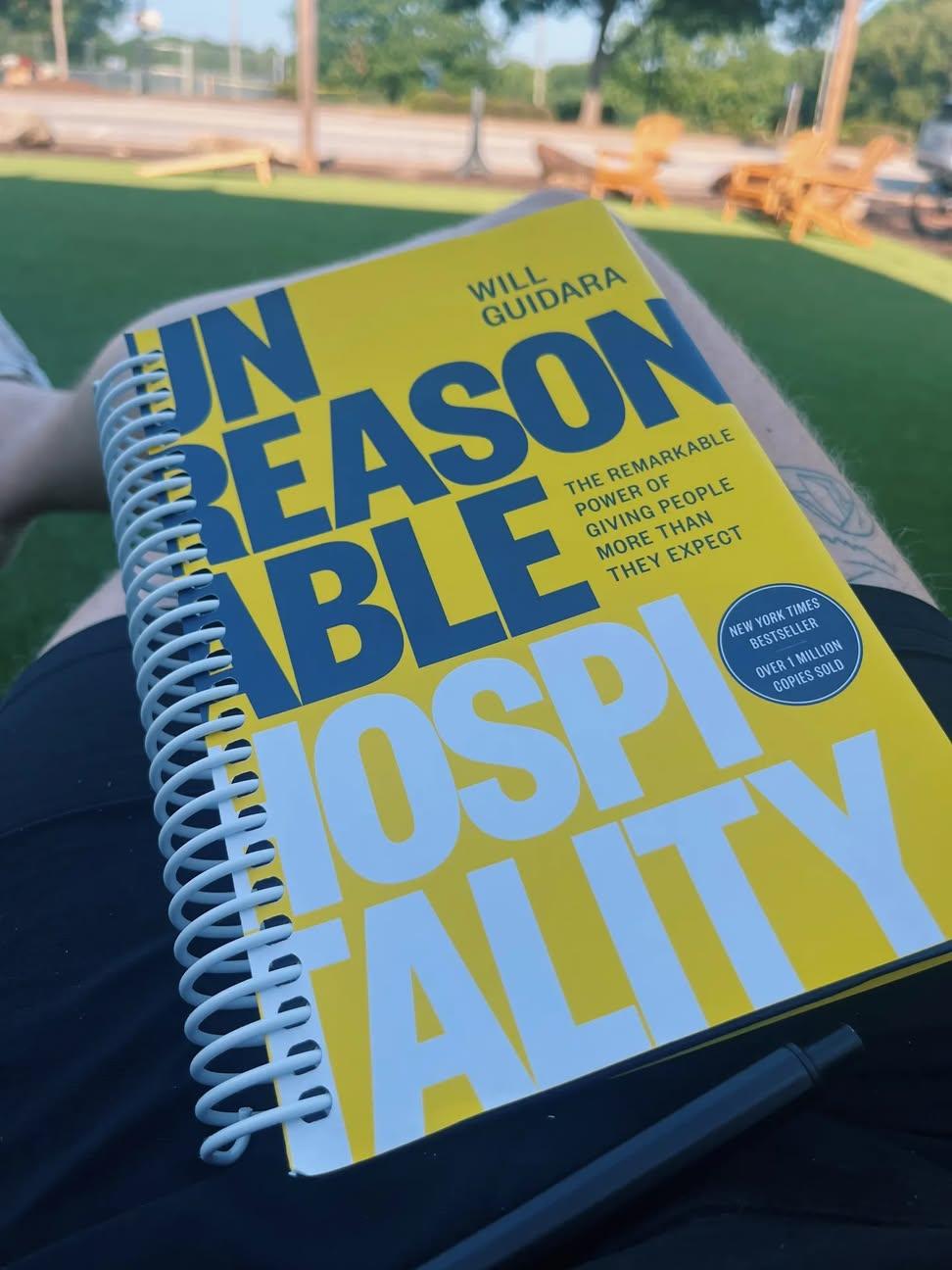
Summary · 11 min read
Unreasonable Hospitality
The Remarkable Power of Giving People More Than They Expect
Will Guidara
- What it's about
- Unreasonable Hospitality is Will Guidara’s argument that hospitality is not just a restaurant skill. It is a leadership philosophy. The book was written to show how any team can create moments that make people feel seen, valued, and…
- Why read it next
Will Guidara shows how deliberate acts of hospitality can turn an ordinary service interaction into a lasting memory, drawing on his experience leading Eleven Madison Park. It is a practical story about noticing people, empowering a team and delivering unexpected care without losing operational discipline.
It is the right next read because The Art of Gathering teaches you to design the container and purpose, while Unreasonable Hospitality sharpens the moment-to-moment practice of making the people inside that container feel genuinely seen.