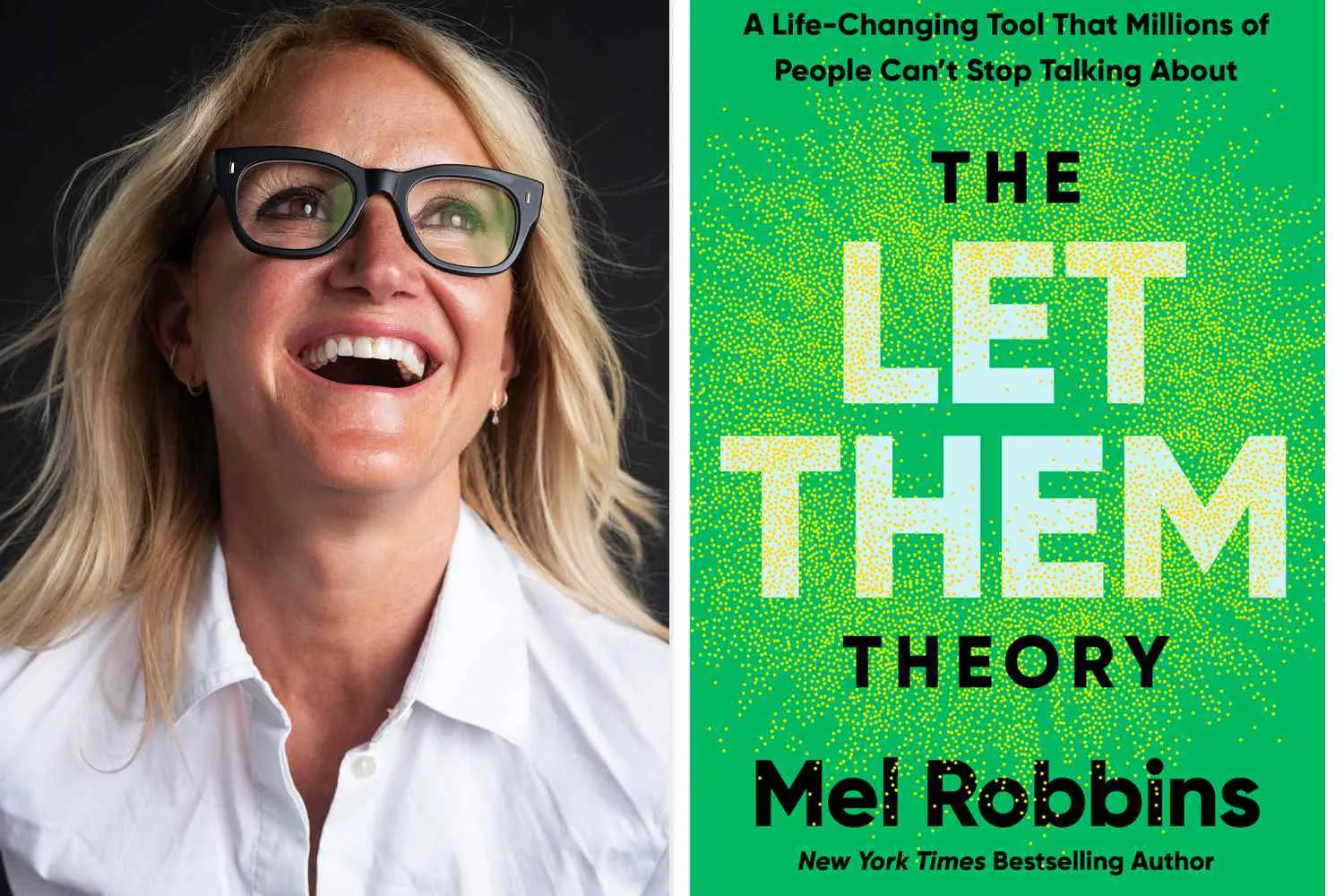
Why this book exists: most of us are quietly exhausted from controlling what we can't
Mel Robbins wrote The Let Them Theory for the person who is worn down by other people — by their opinions, their moods, their choices, and the endless mental effort of trying to manage all of it. Her claim is that most of us pour enormous energy into things we have no power over: what a friend thinks of us, whether a colleague replies, how a family member behaves, the slow line, the rude stranger. That effort feels productive, but it mostly just produces stress.
The frustration she's addressing is the gap between how smart we think we are and how much of our peace we hand away every day. Robbins is open that for the first five decades of her life she had no idea that her instinct to control other people and small annoyances was draining her. The book is her attempt to hand readers a single, repeatable mental move that interrupts that habit in real time.
It's written for a broad audience — people-pleasers, over-thinkers, anyone caught in comparison, anyone tangled up in family drama or workplace friction — but the underlying promise is narrow and concrete: stop spending your life on what isn't yours to carry.
Who Mel Robbins is (and why this one lands)
Mel Robbins is a former criminal defense lawyer turned author, podcast host, and one of the most-followed voices in the self-help world. She broke through with her 2011 TEDx talk and the idea that became The 5 Second Rule — a simple, mechanical hack for beating hesitation. Since then she's built The Mel Robbins Podcast into one of the largest audio shows in the world, which is the real engine behind this book: she road-tested the "Let Them" idea on millions of listeners before it ever hit the page.
The Let Them Theory is co-written with her daughter, Sawyer Robbins, and that collaboration shows in the tone — it's warm, conversational, and built around family stories rather than academic argument. Robbins isn't presenting herself as a researcher; she's a translator. Her actual skill, which both fans and critics agree on, is taking a long-standing idea and compressing it into two words you can actually remember when you're upset. That's the credibility she brings: not original theory, but unusual clarity.
The thesis in one line
When a person or situation is stressing you out, two words — Let Them — release your grip on what you can't control, and two more — Let Me — return your focus to the only thing you can: your own response.
The deeper problem: control is a stress habit disguised as caring
The book's real target is a hidden assumption most of us carry: that if we just try hard enough, we can manage other people's behavior, opinions, and emotions. Robbins argues this is both false and exhausting. Every attempt to control something outside your power — a partner's mood, a friend's choices, a stranger's rudeness — quietly raises your anxiety and lowers your energy, because you've tied your peace to an outcome you'll never govern.
Underneath the catchy phrase is an old idea given a new handle. The Stoics called it the dichotomy of control; cognitive behavioral therapy calls it letting go of what you can't change; Buddhism calls it non-attachment. Robbins' move is to make that wisdom usable in the exact moment your chest tightens — not as a philosophy to study, but as a reflex to deploy. The reframe is subtle but important: "Let Them" isn't apathy or giving up. It's choosing to stop spending yourself on the uncontrollable so you have something left for the controllable.
How the theory works: Let Them, then Let Me
The whole system is two halves, and Robbins is insistent that you need both. Used alone, the first half can curdle into passivity; the second half is what turns it into agency.
- Let Them. In any moment where you feel yourself ramping up — annoyed, jealous, anxious, trying to manage someone — you say Let Them. Let them have their opinion. Let them make that choice. Let them be disappointed, be late, be wrong, leave you off the invite. The instant you say it, you consciously release control over what another person thinks, says, does, or feels. It's permission to stop fighting reality.
- Let Me. This is the half people forget. Once you've released what isn't yours, you say Let Me and take responsibility for what you do next. Let me decide how I respond. Let me protect my energy. Let me set the boundary, change my plans, or walk away. Where "Let Them" is acceptance, "Let Me" is ownership. The power is in the sequence. "Let Them" lowers the emotional temperature so you're not reacting from frustration; "Let Me" then routes that recovered energy into a deliberate choice. Robbins applies this loop across the areas where most people lose the most peace: comparison and envy, the stress of daily annoyances, fear and self-doubt, adult friendships that drift, romantic relationships and dating, and family dynamics where you can't change anyone but yourself.
Ideas you can actually use this week
Use it as a circuit-breaker, not a life philosophy
The most practical thing about the theory is that it works at the speed of irritation. You don't need to meditate on it — you say the two words the moment you feel the urge to control or the spiral of worry start. It's designed to interrupt the reaction before it runs away with you.
Separate "their behavior" from "my response"
Most stress, Robbins argues, comes from blending the two. Someone is rude, so you ruin your afternoon replaying it. "Let Them" lets the rudeness be theirs; "Let Me" keeps the afternoon yours. The discipline is to keep drawing that line, again and again.
Let them reveal who they are
A recurring application: when you stop managing people's impressions of you and stop chasing those who don't choose you, you get accurate information. People show you their priorities through their actions. "Let Them" turns that from a wound into data — useful for friendships, dating, and knowing where to invest.
Use "Let Them" on comparison
Robbins spends real time on envy and comparison, especially online. The move is the same: let them post the highlight reel, let them get the promotion, let them have the life that looks better — then "Let Me" redirect that energy toward what you actually want, treating the envy as a signal rather than a verdict.
Pair it with "Let Me" or it becomes a doormat
The single most important usage note: if you only ever "let them," you can drift into passivity and resentment. The book is explicit that the second step is non-negotiable. Acceptance without agency isn't the theory — it's just giving up with a slogan.
The stories that carry it
The Let Them Theory runs on personal anecdotes rather than case studies, and a few do the heavy lifting.
The origin story is the one everyone remembers. On the night of her son's prom, Robbins was micromanaging the group's plans when her daughter Kendall cut in: "Mom, if Oakley and his friends want to go to a taco bar for pre-prom, Let Them." The phrase landed like a key turning in a lock, and the rest of the book is essentially her unpacking why those two words defused her so instantly.
The everyday friction stories — traffic, slow lines, a roommate who always does the annoying thing, the friend who didn't call when she was in town — are used to show how often we hand our mood to trivial things. The lesson is consistent: the cost isn't the event, it's the energy we spend resisting it.
The relationship and friendship threads illustrate the harder version: letting an adult friendship fade without forcing it, letting a partner be who they are instead of who you're managing them to be, and letting family members make choices you wouldn't. These carry the emotional weight of the book, because they're where "letting them" feels most like loss — and where "Let Me" matters most.
Where the book gets pushed back on (and how to read it fairly)
The Let Them Theory was a massive bestseller, but it draws sharp criticism, and it's worth holding both at once.
The loudest controversy is about originality and authorship. "Let Them" was a poem written by Cassie Phillips that went viral in 2022, before Robbins built her brand and trademark around the same two words; critics argue she popularized — and commercialized — a phrase she didn't originate without adequately crediting it.[1] Robbins does acknowledge in the book that detachment is ancient (the Stoics, the Buddhists), but the timeline around the poem is the part that genuinely bothers people. The fair reading: judge the tool on its usefulness, but know that "new idea" isn't the right frame — this is repackaging, not invention.
A related critique is about substance versus packaging. Reviewers point out that the core idea is borrowed from Stoicism, Buddhism, and CBT, and that the book stretches a two-word concept across a long text with a lot of repetition and motivational filler. If you've read any Stoic philosophy, much of this will feel familiar dressed in friendlier clothes.
The most important practical critique is that "let them" can be misread as passivity or tolerating mistreatment. Robbins addresses this directly — that's the entire reason "Let Me" exists — but critics note the nuance gets lost in the viral, slogan-sized version, where it can sound like "let people walk all over you." In situations involving abuse, exploitation, or real power imbalances, "letting them" is not the answer, and the book is thin on those harder cases.
There's also a workplace and power-dynamics limit. Several reviewers (including book clubs reading it for professional growth) note that you can't simply "let them" when a boss or an institution is making decisions that harm your team or break the rules. The principle of focusing on your own response still applies, but the campaign-style simplicity strains in contexts with hierarchy, stakes, and accountability.
Finally, the harshest critics frame it as classic self-help marketing — a genuine nugget of truth (personal agency) wrapped in repetition and brand-building. That's a cynical read, but even sympathetic reviewers admit the book is padded. Take the two-step tool, leave the filler.
Who this is for (and who should pass)
Read this if you're a people-pleaser, an over-thinker, or someone who gets hooked by comparison and other people's opinions — and you want one simple, sticky tool you'll actually remember in the heat of the moment. It's especially good for anyone navigating adult friendships, family tension, or low-stakes daily stress, and it pairs well with a commute or an audiobook listen.
Pass on it (or borrow rather than buy) if you're already well-read in Stoicism, CBT, or mindfulness — you'll find little new — or if your situation involves abuse, serious power imbalances, or decisions where stepping back isn't safe or responsible. In those cases the "Let Them" half can do harm without a much stronger account of boundaries and action than the book provides.
Where to go deeper
What to read next
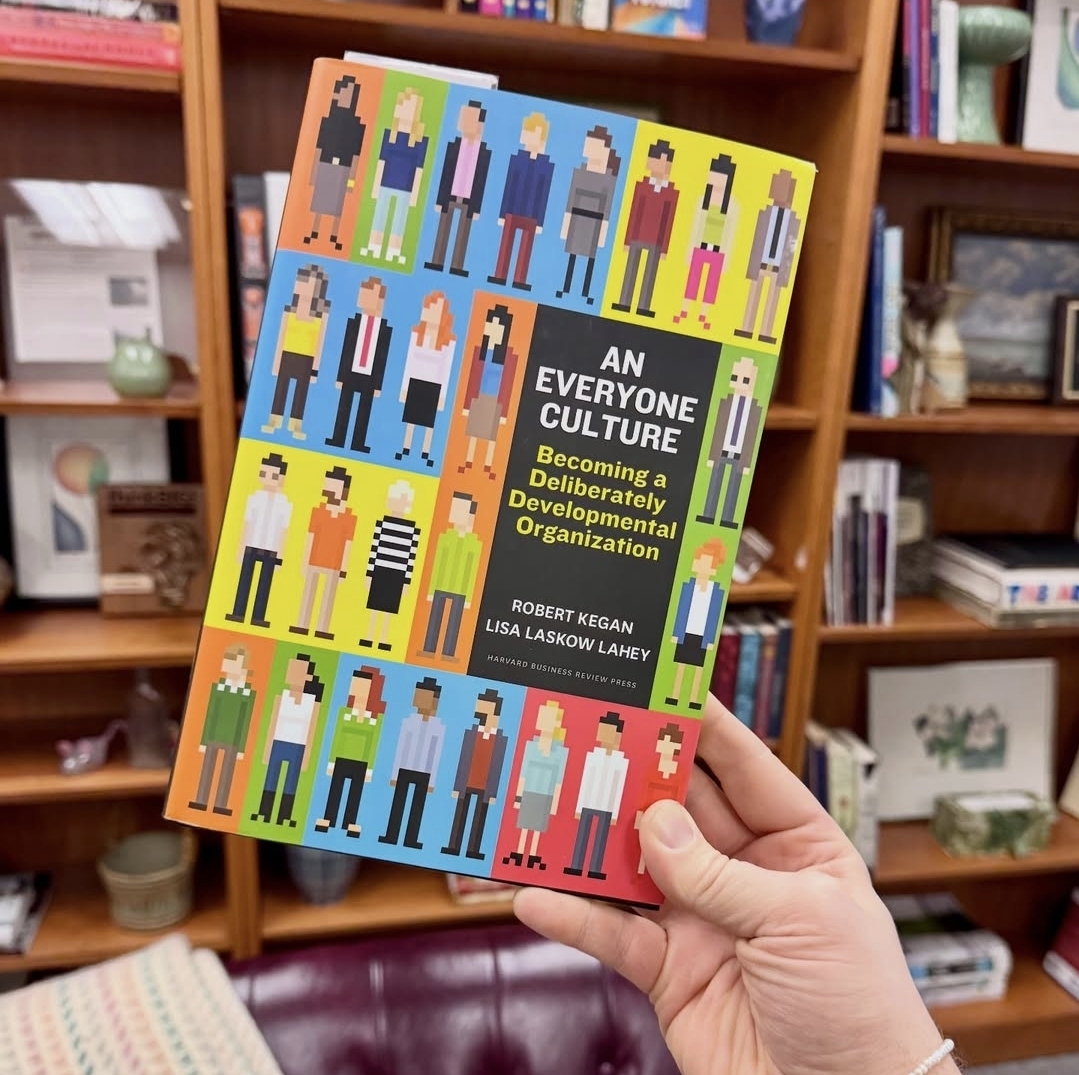
Summary · 7 min read
An Everyone Culture
Becoming a Deliberately Developmental Organization
Robert Kegan; Lisa Laskow Lahey
- What it's about
- Most organizations run on an unspoken deal: look competent, don’t show weakness, and quietly work around your limitations. People spend huge energy on impression management—hiding mistakes, protecting status, avoiding hard conversations…
- Why read it next
Robert Kegan and Lisa Laskow Lahey show how the self-protective behaviors and "hidden commitments" that quietly run our lives can be surfaced and changed, both individually and inside organizations. It's a deeper, more rigorous look at the same human problem Robbins is poking at — why we react the way we do, and how to grow past it.
It's the right next read because Let Them gives you a fast tool for managing your reactions, while An Everyone Culture explains the underlying psychology of why those reactions exist and how to genuinely transform them.