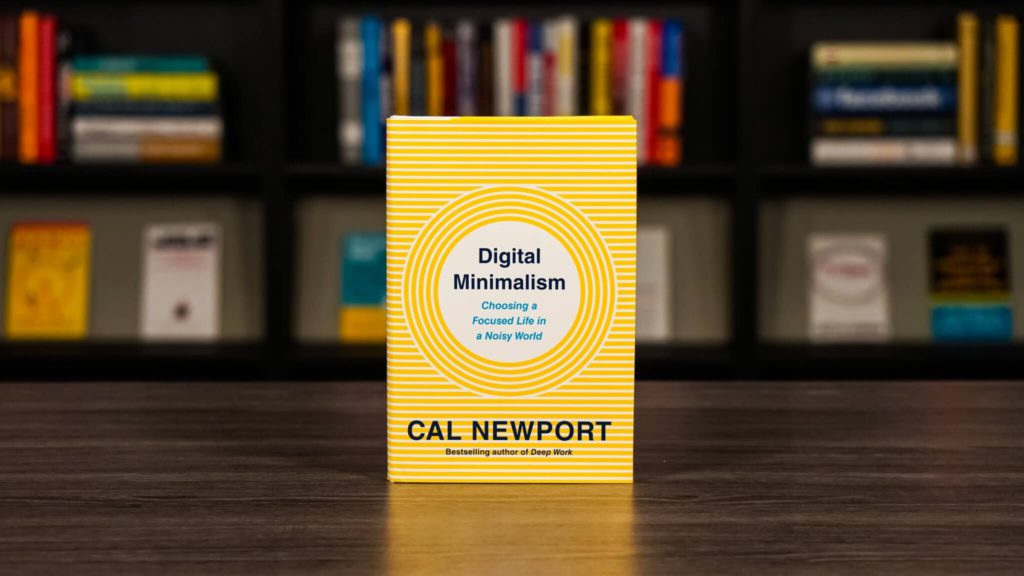
Why this book exists
Cal Newport wrote Digital Minimalism as a pushback against a quiet cultural shift: we went from using helpful tools to living inside an always-on attention economy. His claim is not that technology is evil, but that we adopted it by default, without values, boundaries, or intention. The result is a life that feels scattered, reactive, and strangely unsatisfying.
The book is for anyone who feels “busy but not fulfilled” and suspects their phone is part of the problem. It is especially for people who don’t want to quit the internet, but do want their attention, time, and relationships back.
Why Cal Newport’s perspective matters
Newport is a computer science professor (Georgetown) and a long-time writer about focus, productivity, and meaningful work (notably Deep Work). He understands the incentives behind modern platforms, but he’s also interested in the human side: what a good life looks like, and what attention has to do with it.
The thesis in one sentence
If you decide what you value and then use technology only in ways that directly serve those values, you can reclaim attention, deepen your relationships, and build a calmer, more meaningful life.
The deeper problem: convenience that steals meaning
The book argues that the real cost of constant digital connection is not just distraction. It is the erosion of deeper satisfactions: solitude, craftsmanship, real community, and sustained attention. When you fill every quiet moment with content, you lose the space where you digest experience, form opinions, and hear yourself think.
Newport also points to a mismatch: our brains and social lives were shaped for slower, richer signals (face-to-face time, long conversations, boredom, nature). Meanwhile, our devices are optimized for high-frequency novelty and social validation. Even if you “feel fine,” you can slowly become dependent on stimulation.
Digital minimalism: a philosophy, not a hack
Newport calls his approach digital minimalism: a way of thinking where you treat attention as precious and technology as a tool you choose deliberately.
The philosophy has three core ideas:
- Clutter is costly. Too many optional apps and feeds fragment your day and mind.
- Optimization beats convenience. Choose tools for their best, high-value use — not because they are easy.
- Intentionality is satisfying. You feel better when your choices are aligned with values. This is not “use less tech.” It is “use tech with purpose.”
The 30-day digital declutter (the reset)
The practical engine of the book is a digital declutter. It is a temporary reset that breaks the default relationship with your devices.
The declutter has three parts:
- Step away from optional technologies for 30 days. Optional means: it’s not essential to your work or core responsibilities.
- During the break, rediscover high-quality leisure. You must replace the empty space with better activities, otherwise you relapse.
- After 30 days, reintroduce tech intentionally. Each tool must earn its place with a clear rule. A key detail: the goal is not deprivation. The goal is clarity. The pause lets you notice what you were using tech for (connection, validation, escape, information) and whether it really delivered.
What “high-quality leisure” looks like
Newport argues that many people don’t just have a tech problem. They have a leisure problem. When life is dominated by low-effort consumption, the phone becomes the easiest default.
High-quality leisure is effortful and absorbing. It often includes:
- Craft and making (woodwork, cooking, writing, building, music)
- Physical challenge (sport, hiking, training)
- Real social time (shared activities, conversation, community) The point is not to “stay busy.” The point is to build a life that is compelling enough that mindless scrolling loses its pull.
Solitude is a skill you can rebuild
One of the book’s most important ideas is solitude deprivation: never being alone with your own thoughts. Newport claims this has emotional and cognitive costs, from anxiety to shallow thinking.
Solitude, as he defines it, is not physical isolation. It’s freedom from inputs. You can be alone on a walk, or journaling in a café — as long as you’re not constantly consuming other people’s content.
He suggests simple practices like long walks without a phone, journaling, or structured reflection. The point is to make space for internal processing again.
Social media: treat it like a risky tool
Newport is unusually direct about social media. He argues it should be treated like a power tool: useful in specific contexts, harmful as a default.
He recommends an “attention audit” mindset:
- What value does this platform give me that I can’t get elsewhere?
- What does it cost me in attention, mood, and time?
- If I keep it, what exact rules will prevent it from expanding? In other words: don’t ask “do I like it?” Ask “does it serve my values?”
Failure modes (why people relapse)
The book warns about predictable traps:
- You remove apps but don’t replace the need. If scrolling was your stress relief, you need a better stress relief.
- You keep “just one feed.” One feed becomes five again unless you set rules.
- You confuse information with wisdom. Being constantly updated rarely makes you more thoughtful.
- You try to do it alone. Community and shared activities make the new lifestyle stick.
Essential narratives (and the lesson)
Newport uses stories to make the stakes feel real:
- The rise of persuasive technology: platforms are engineered to keep you engaged. The lesson is to stop treating your attention as an infinite resource.
- Craft communities and analog hobbies: people who build things often report deeper satisfaction than people who mostly consume. The lesson is that meaning is often tied to effort.
Notes, critiques, and caveats
- The book can feel more like a philosophy plus a reset plan than a fully researched academic argument. If you want heavy experimental evidence, you may find it light.
- Newport is strongest on “what to do” and “why it works,” and weaker on constraints some people face (jobs, caregiving, social expectations) where availability is not optional.
- Still, the value is high because the core move is practical: clarify values, reset, rebuild.
Reader fit: who should read this (and who shouldn’t)
Read it if you:
-
Feel your attention is fragmented and want a clear system to change it
-
Want to use tech without feeling controlled by it
-
Want better leisure, deeper focus, and more real connection Skip it if you:
-
Are looking for a small “phone settings” checklist rather than a lifestyle shift
-
Already live with strict boundaries and low social media use
Resources
What to read next
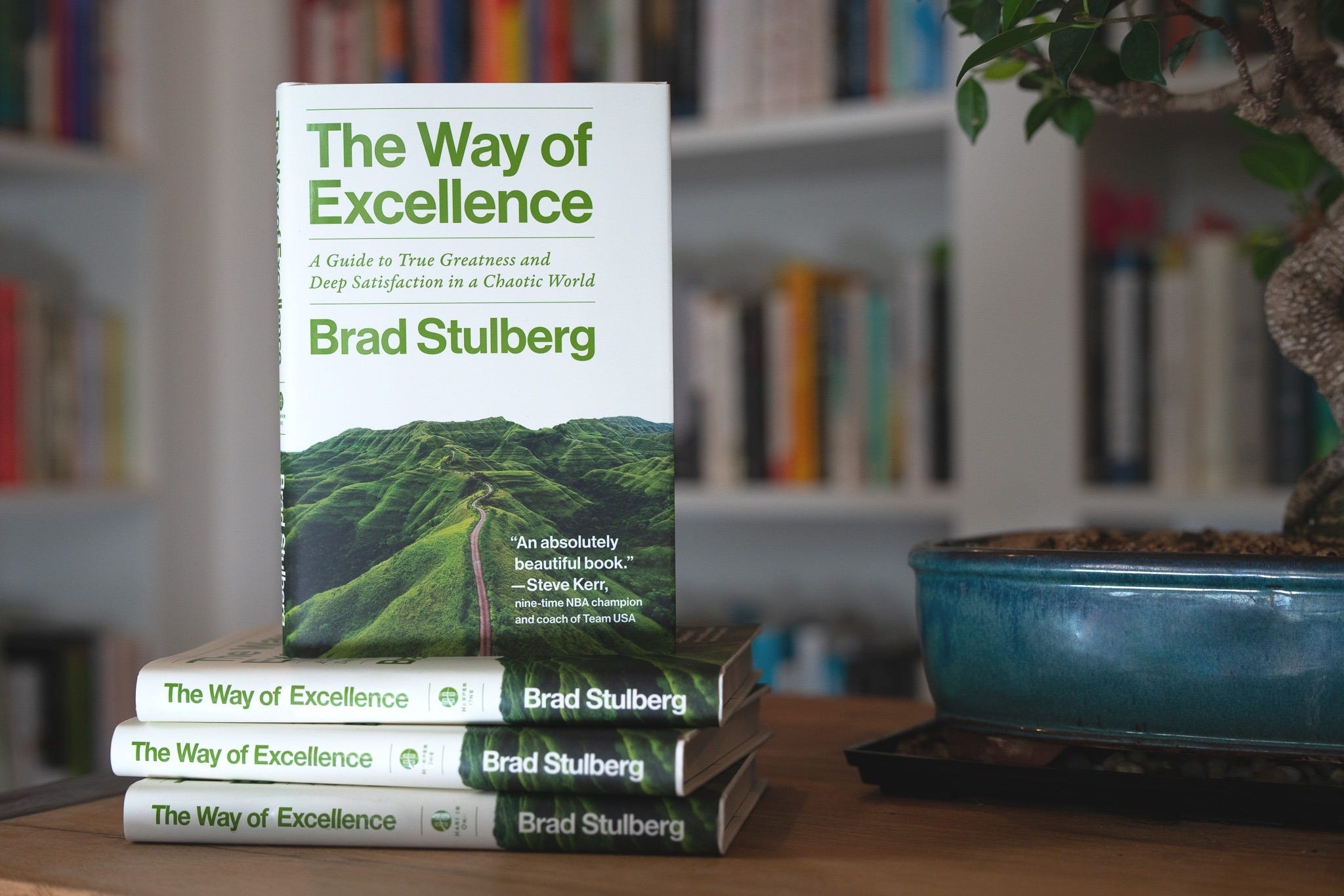
Summary · 6 min read
The Way of Excellence
Brad Stulberg
- What it's about
- Brad Stulberg wrote The Way of Excellence as an antidote to modern “zombie burnout”: the drained, distracted feeling of moving through a chaotic world while still trying to do meaningful work. The book argues that most people don’t need…
- Why read it next
Brad Stulberg argues that excellence is a practice, not a result: committing to values, showing up consistently and caring deeply about the process, especially in a distracted world.
It is a good next read because Digital Minimalism clears the noise from your attention, and The Way of Excellence shows you what to do with that reclaimed attention.