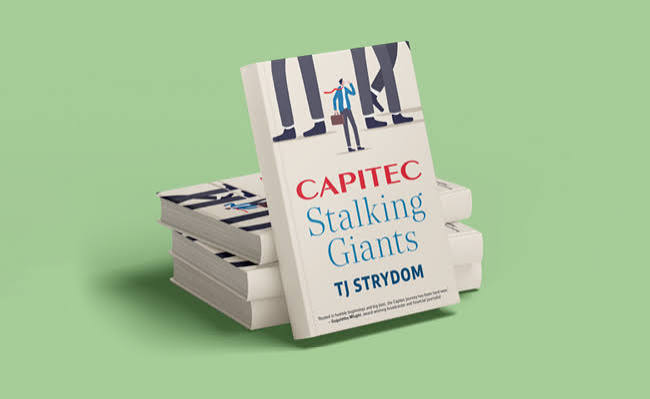
Why this book exists: a David-and-Goliath story from South African banking
Capitec: Stalking Giants was written to explain one of the most improbable business success stories of democratic South Africa: how a small Stellenbosch upstart, built out of a network of microlenders once dismissed as “loan sharks,” grew into the country’s largest bank. For most of South Africa’s history, formal banking served only a minority, treating the vast majority of people as “unbankable.” TJ Strydom set out to tell the story of the founders who saw that exclusion as the opportunity of a lifetime.
The book is part business history, part case study, and part entrepreneurial playbook. It’s written for entrepreneurs, operators, and anyone curious about how you actually build something new in a market dominated by entrenched giants — the “big four” of Absa, Standard Bank, FNB, and Nedbank, with their glass towers in Johannesburg.
Who wrote it, and why that matters
TJ Strydom is a South African business journalist and author who has written for The Times, Reuters, the Sunday Times, and Beeld. Capitec is his third major business book, following Christo Wiese: Risk & Riches (2019) and Koos Bekker’s Billions (2022) — both deep dives into the personalities and companies that shaped modern South African capitalism, including Pep, Shoprite, Steinhoff, M-Net, and Naspers.
That background matters. Strydom writes as a reporter, not a cheerleader. He interweaves character, context, and financial detail, and he’s comfortable sitting with the uncomfortable parts of the story — the microlending roots, the regulatory grey zones, and the debates about whether easy credit truly helps poor customers. The result reads like reported narrative rather than a company-sponsored hagiography.
The thesis, in one sentence
A determined outsider can topple entrenched giants not by copying them, but by relentlessly serving the customers the incumbents ignore — with radical simplicity, low cost, and human contact.
The deeper problem: banking built to exclude
The real subject beneath the Capitec story is exclusion. During and after apartheid, the retail banking sector was designed around a relatively wealthy minority. The majority of South Africans were seen as too poor, too risky, or too expensive to serve. Branches closed in the areas that needed them; fees and complexity kept ordinary people out.
When the government deregulated small loans in the early 1990s, a chaotic microlending industry rushed into the gap. Much of it was predatory. Strydom’s narrative shows how Capitec’s founders looked at that messy, disreputable world and saw something the big banks missed: millions of hard-working people who wanted credit, savings, and dignity, and who were being either ignored or exploited. The opportunity wasn’t to lend more aggressively — it was to bank these customers properly.
How the story works: the rise of a challenger bank
Strydom traces Capitec from its roots in the PSG stable in Stellenbosch, through its consolidation of microlenders in the late 1990s, its banking licence in 2001, and the difficult early years when growth stalled and survival was uncertain. The turning point came when the team stopped thinking like microlenders and started building a genuine transactional bank.
A few founders and leaders anchor the story:
- Michiel Le Roux, the founding chairman, who provided vision and steel and had learned hard lessons in the traditional banking world.
- Riaan Stassen, the operator-CEO who drove execution, discipline, and the branch-and-technology model.
- Gerrie Fourie, who carried the growth story into the era of tens of millions of clients.
- Jannie Mouton and PSG, the investment engine and Stellenbosch network that backed the bet early. The irony Strydom enjoys is that a “bunch of outsiders” with roots far from Johannesburg’s banking establishment built the thing the establishment couldn’t.
What Capitec did differently: the strategy in practice
The heart of the book is a set of strategic choices that, taken together, formed a coherent and hard-to-copy model. None of them was magic on its own; the power came from how they reinforced each other.
- Serve the ‘unprofitable.’ Capitec built its business around the customers the big four had written off, and discovered they were a huge, loyal market.
- Radical simplicity. Instead of a confusing menu of products, Capitec offered essentially one transparent account — one card, one simple fee structure, real interest on savings. Simplicity was the product.
- Open branches while others closed them. As incumbents cut costs and shrank their physical footprint, Capitec expanded, putting accessible branches where people actually lived and worked.
- Human contact over pure automation. While others pushed customers into call centres and machines, Capitec kept the personal, face-to-face relationship — and paired it with clean, modern technology behind the scenes.
- Low cost, high volume. Efficiency and transparent pricing let it undercut rivals while still making money, one small transaction at a time.
- Long hours and a service culture. Branches stayed open when customers needed them, signalling that the bank was built around the client, not the banker.
Practical understanding: lessons you can actually use
The reason this book travels beyond banking is that its lessons generalise to almost any industry with fat, complacent incumbents.
First, look for the customers everyone else finds annoying, unprofitable, or beneath them. Underserved markets are where disruption usually starts, because incumbents have no incentive to defend them.
Second, treat simplicity as a competitive weapon. Complexity protects incumbents and confuses customers. A radically simple, transparent offer builds trust and lowers your own cost to serve.
Third, be willing to zig where the industry zags. Capitec’s counter-cyclical moves — opening branches, keeping human contact — worked precisely because they were the opposite of the herd. Doing the obvious-but-unfashionable thing can be a moat.
Fourth, respect the boring engine. Behind the growth story sits relentless operational discipline, cost control, and patient capital. The exciting outcome was built on unglamorous consistency.
Essential narratives: the moments that teach the lesson
The most instructive thread is the transformation from a disreputable microlender into a trusted national bank. Strydom shows how the founders had to shed the “loan shark” identity and earn legitimacy — with regulators, with investors, and with ordinary customers who had been burned before.
Another key narrative is the slow-burn early period, when Capitec was small, doubted, and nearly invisible to the giants. The book lingers here because it’s the truest part of the story: the giants ignored the upstart until it was too big to ignore, and by then the model was proven and the momentum was compounding.
And then there’s the vindication — Capitec being named the world’s best bank in 2016 and later overtaking the establishment in market value. Strydom uses these milestones not to gloat but to underline how completely the underdog rewrote the rules.
Notes, critiques, and caveats
Strydom is admiring but not blind, and a fair reading should hold a few tensions.
- The credit question. Capitec’s roots and much of its early profit came from unsecured lending. Critics reasonably ask whether making credit easy for poor customers always improves their lives, or whether it can deepen debt cycles. The book doesn’t fully resolve this, and readers should keep the concern alive.
- Survivorship and hindsight. Like most success stories, the narrative can make a risky, contingent journey look inevitable. Timing, regulation, and luck all played roles that are easy to underweight in retrospect.
- A largely internal, South African lens. Reviewers note the book is celebratory and told mostly from the builders’ point of view. It’s an authentically local story with a happy ending, which is part of its charm — but it means the sharpest structural critiques of the sector get lighter treatment.
- Journalistic breadth over analytical depth. Strydom is a storyteller first. If you want a rigorous strategic teardown with frameworks and data, you’ll need to extract the lessons yourself; the book gives you the narrative, not a model. Held together, these caveats don’t diminish the achievement — they just remind you to read it as a well-reported story with lessons, not as a formula guaranteed to repeat.
Reader fit: who should read this (and who shouldn’t)
Read it if you’re an entrepreneur, operator, or strategist who loves a concrete, real-world disruption story — especially one set in an African market. It’s also a genuinely enjoyable read for anyone interested in South African business history or how challenger brands beat incumbents.
You can skip it, or read it lightly, if you’re after a structured management framework or a global, comparative analysis of banking. This is narrative non-fiction with practical takeaways, not a textbook.
Resources (credible links)
What to read next
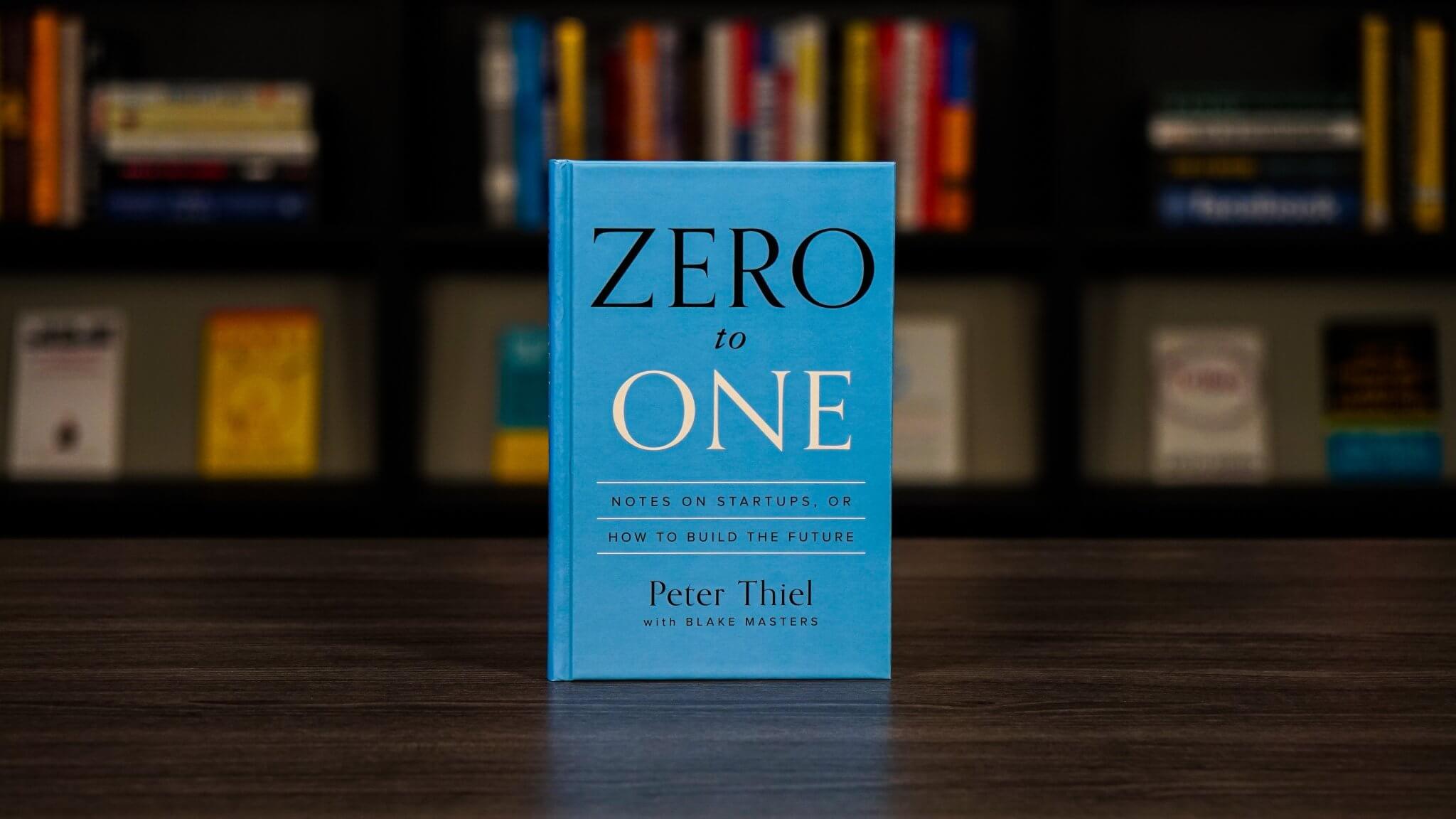
Summary · 5 min read
Zero To One
Peter Thiel
- What it's about
- Zero to One is a challenge to a popular startup myth: that success is mostly about hustle, iteration, and competing harder. Peter Thiel argues that the best companies do something different. They create a new category or a new way of…
- Why read it next
If the Capitec story showed you how a challenger wins by refusing to compete on the incumbents’ terms, the natural next step is a book about why that works.
Read Zero To One. Peter Thiel argues that lasting value comes from building something genuinely new and escaping direct competition, rather than copying what already exists. It’s a two-sentence leap from Capitec’s playbook: Thiel gives you the theory of why creating a new category beats fighting the giants head-on — exactly the move Capitec made when it chose to serve the customers everyone else ignored.