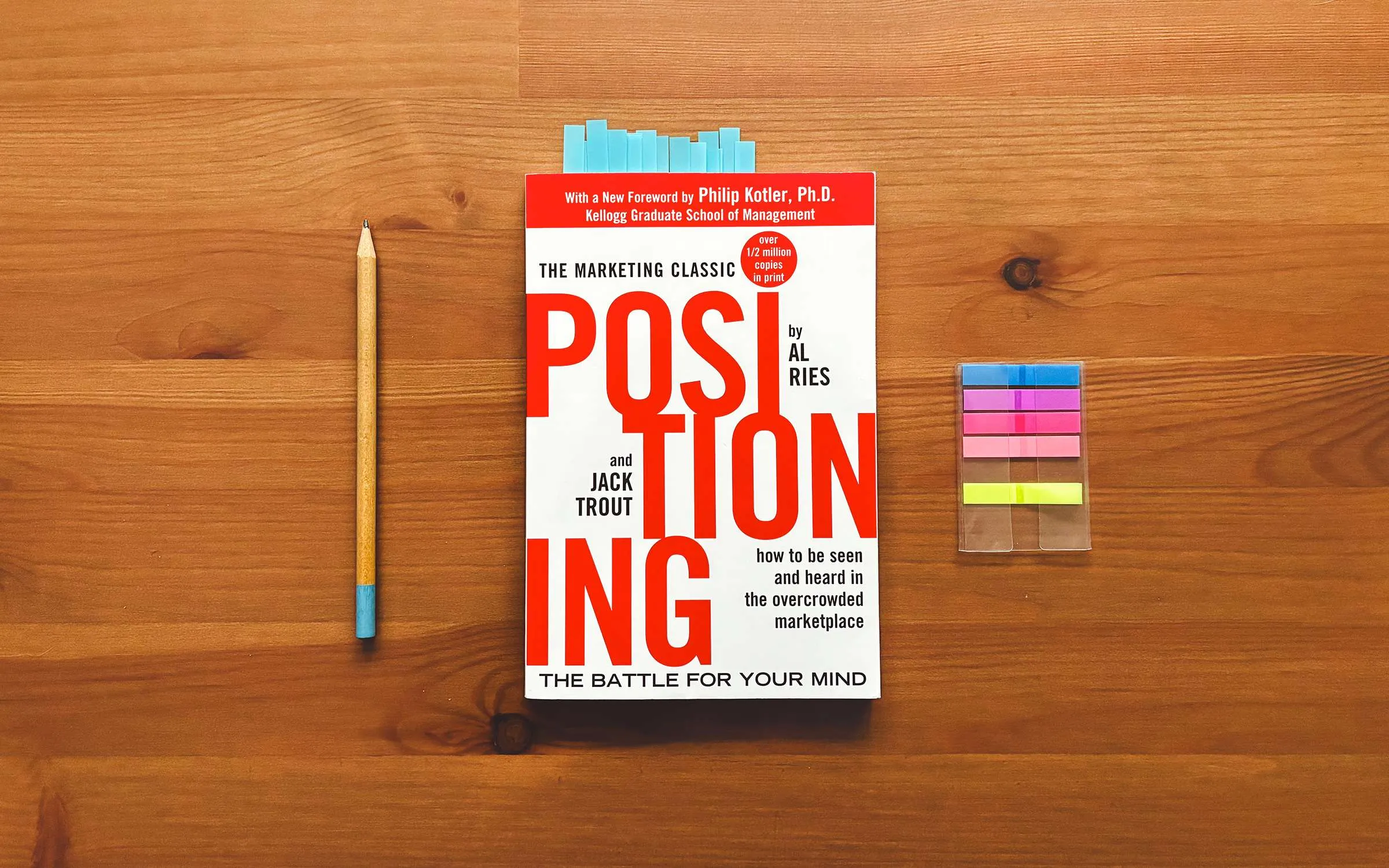
Why this book exists: marketing became noise
Ries and Trout wrote Positioning for a world where marketing was getting louder, not clearer. More products. More media. More “me too” brands. The average buyer has limited attention, so the mind protects itself by filtering most messages out.
Their argument is blunt: you can’t win by saying more. You win by owning a simple idea in the prospect’s mind. Positioning is not what you do to a product. It’s what you do to perception.
If you’re trying to build a brand, launch a product, or explain a company in a crowded category, this book is basically a manual for how to stop fighting on the “features” battlefield and start fighting on the “meaning” battlefield.
Who Ries and Trout are (and why this book had impact)
Al Ries and Jack Trout were advertising and marketing practitioners who spent their careers watching why campaigns worked (and why most didn’t). Their credibility here is not academic. It’s pattern recognition: how the market behaves when too many companies compete for the same attention.
They also wrote early enough to notice a shift that still defines modern marketing: the problem isn’t that customers don’t get enough information. The problem is that they get too much. So the scarce resource is not media space. It’s mental space.
The big idea in one sentence
In an overcrowded market, the brands that win are the ones that claim a clear, simple, and credible position in the prospect’s mind—and then protect it with focus and consistency.
The deeper problem: the mind is the market
A lot of marketing talk assumes the market is “out there” and customers are rational evaluators of product quality. Ries and Trout flip that. The market you’re really competing in is the mind.
The mind doesn’t hold a detailed spreadsheet of every brand. It holds a few categories and a few names inside each category. It remembers “the first,” “the safe one,” “the premium one,” “the cheaper one,” “the one my dad used,” “the one I saw everywhere.”
So when companies try to position with complexity—multiple messages, multiple audiences, multiple reasons to believe—they collide with a simple constraint: people don’t have room for that.
The book treats positioning as a discipline of reduction:
- reduce your message to one idea
- reduce your target to one mind you’re trying to enter
- reduce your ambition to one place you want to own That’s the “battle.” You’re fighting for a slot.
How the book “works”: positioning is an organised system for finding a window in the mind
The book is not a step-by-step workbook, but it repeats a small set of principles so often that it becomes a system. The system is: start with what’s already in the prospect’s mind, then attach yourself to it in the simplest possible way.
Start with the receiver, not the sender
Most companies communicate from the inside out: “Here’s what we made. Here’s why it’s great.” Ries and Trout argue you must start from the outside in: “What does the prospect already believe? What categories and comparisons already exist? What do they already associate with us or with competitors?”
Positioning is “thinking in reverse.” It’s less about inventing meaning from scratch and more about leveraging existing mental structures.
The category ladder: how people store brands
One of the book’s most useful mental models is the ladder. Each product category is a ladder in the mind. Brands occupy rungs. Most ladders are short. In many categories, customers only remember a handful of names.
This creates a practical truth: being first (or perceived as first) matters, because the first brand gets the simplest mental association. Everyone else must work harder for a smaller slot.
The law of leadership (and why “better” is often irrelevant)
If you’re the leader, your positioning job is usually to reinforce the position you already own. You don’t need to persuade people you exist. You need to keep the association strong.
If you’re not the leader, “we’re better” is rarely enough. The mind doesn’t re-rank brands easily. So challengers need a different game: find a new angle, a new category, or a clear contrast that gives the prospect permission to place you somewhere distinct.
The power of focus: one idea, one identity
The book keeps returning to focus as the real marketing superpower.
A position is a single idea. Once you own it, you can extend your business behind it—but you can’t easily own two unrelated positions in the same mind.
This is why they warn against fuzzy messages and broad claims. “Quality.” “Innovation.” “Customer-centric.” These are not positions. They’re vague compliments any brand can claim. A position must be specific enough that it excludes others.
Names matter more than you think
Ries and Trout treat naming as part of positioning, not decoration. A name should help the prospect place you quickly. If your name is generic, confusing, or disconnected from your promise, you’re making the mind work harder.
Good names reduce cognitive load. They act like handles.
Line extension is the silent killer
One of their strongest warnings is about line extension: using a successful brand name to cover too many different products.
Their logic: a strong position is clarity. Line extension creates blur. When the name means too many things, it becomes harder for the mind to retrieve the original association. In the long run, the brand loses the very mental slot that made it valuable.
This doesn’t mean “never expand.” It means expansion should usually happen through new brands (or very carefully designed sub-brands) so that each position stays clean.
Practical ideas you can actually use
This book is packed with examples, but the main practical value is in the questions it forces you to ask.
The positioning questions
When you’re stuck, the book’s lens becomes a set of prompts:
- What category ladder are we on in the customer’s mind?
- What rung do we currently occupy (if any)?
- Who is the leader, and what do they own?
- What position could we plausibly own that is simple, credible, and different?
- What words would people use to describe us when we’re not in the room?
“The obvious” is hard (but it’s the only thing that scales)
A repeating theme is that the best positioning ideas often feel too simple. People distrust simple ideas because they don’t feel like “strategy.” But simplicity is exactly what travels through a noisy environment.
The book basically argues that if your positioning needs explanation, it won’t survive contact with reality.
When you can’t win the existing battle, change the battlefield
If the ladder is crowded and the leader’s position is entrenched, the best move is often to create a new ladder (a new category) or redefine the terms of competition.
This can look like:
- specialising (owning a niche that can later expand)
- reframing (making a different attribute the main battleground)
- contrast positioning (“the alternative to X”) The point is not cleverness. The point is creating a place the mind can store.
Essential narratives (and the lesson in each)
The book uses many short examples rather than a few long stories. The lessons that stick are patterns:
Being first matters because the mind stores the first name most easily. The lesson: if you can plausibly claim “first,” “original,” or “leader,” it’s a positioning asset. If you can’t, don’t pretend—find a different slot.
People remember categories, not feature lists. The lesson: stop describing what you do in ten bullets. Start describing what you are in one sentence.
Line extensions weaken meaning. The lesson: growth strategies that look financially logical can be mentally destructive if they confuse what the brand stands for.
Notes, critiques, and caveats
The book’s biggest limitation is also part of its charm: many examples come from an earlier era of mass media. The world has changed, but the attention problem has intensified. In that sense, the core ideas still land.
Also, the book can sound absolutist. “Never line extend.” “Always focus.” In reality, modern brand architecture can be more nuanced. But treating their claims as strong defaults is useful because most organisations drift toward complexity, not focus.
Finally, the book is more about perception than product truth. It can be misused as a justification for spin. The healthier interpretation is: make the product real, but communicate it in a way the mind can actually hold.
Critiques and caveats (from other sources)
A big critique of Ries and Trout’s worldview is that they can be too rigid about brand and line extensions. One of the most respected opposing voices is David Aaker (brand strategist and academic), who argues that extensions can work, and that the “almost always a mistake” framing is overstated. The practical implication: treat “avoid line extension” as a warning about mental confusion, not as a universal ban—especially if you have strong brand architecture, clear sub-brands, or a genuinely adjacent use case.
Another critique is about time and context. Many readers (and reviewers) note that a lot of the book’s examples are rooted in older mass-media eras and older category dynamics. The ideas still hold, but you have to translate them into today’s environment where categories shift faster, distribution is digital, and positioning can be shaped by product experience and community as much as by advertising.
A softer critique is that the book can oversimplify what it takes to “own” a position. In practice, you can’t just choose a slot. You still need strong execution: a product that delivers, distribution that makes you easy to buy, and enough repetition over time for the association to stick. The book is strongest as a lens for clarity and focus, and weaker as a full operating system for modern go-to-market.
Who should read this (and who shouldn’t)
Read this if you:
-
build brands or products in crowded categories
-
struggle to explain what you do simply
-
want a clear way to think about differentiation that isn’t just “add features” Skip it (or pair it with a newer brand strategy book) if you:
-
want modern examples, digital-era case studies, or tactical performance marketing
-
want a step-by-step positioning template with worksheets
Resources (credible links)
What to read next
Summary · 7 min read
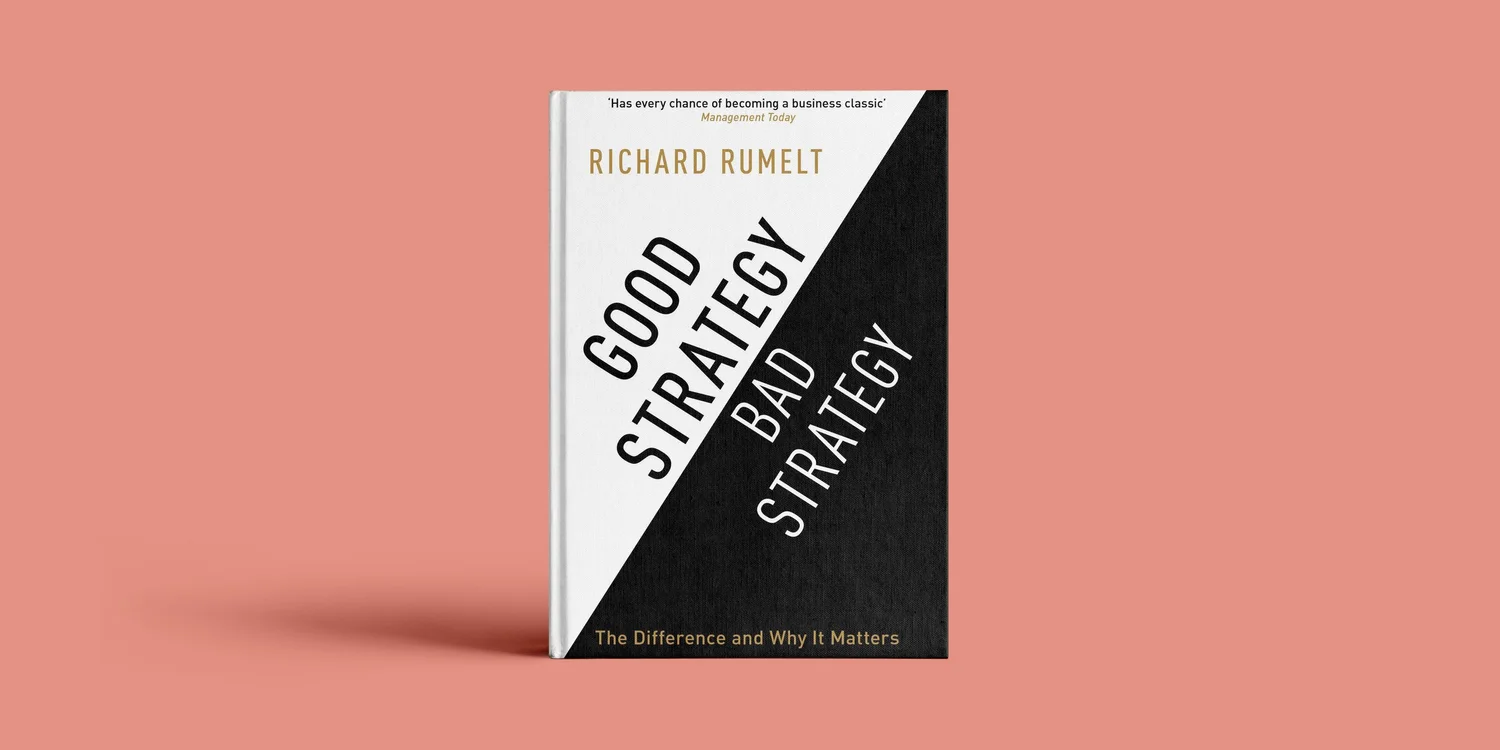
Good Strategy Bad Strategy
The Difference and Why It Matters
Richard P. Rumelt
- What it's about
- Richard Rumelt wrote Good Strategy/Bad Strategy to fix a frustrating, expensive confusion: in many organisations, “strategy” has become a decorative word. It gets attached to annual planning decks, lofty vision statements, and long lists…
- Why read it next
Rumelt’s book is a clean, modern reset on what “strategy” actually is (and what it isn’t), and it will give you sharper language for making the trade-offs that positioning requires.
It’s a great next read after Positioning because it helps you move from “owning a slot in the mind” to “building a coherent set of choices that makes that slot defensible.”