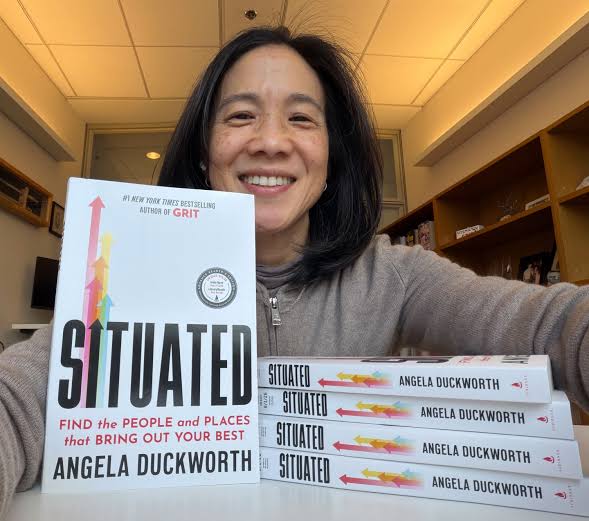
Why this book exists
Angela Duckworth wrote Situated because the story she told in Grit turned out to be only half the truth. After a decade of showing people that passion plus perseverance is a powerful engine for success, she kept noticing the same uncomfortable pattern: even gritty people get stuck, burn out, or quietly underperform when their surroundings work against them. The book is her course-correction. It moves the spotlight off the heroic individual and onto the rooms, peers, mentors, and cultures that quietly decide whether your effort actually compounds.
The promise is simple but counter-cultural: you are told to make the best of your situation, but you would usually do better to make your situation better first.
Who Angela Duckworth is (and why it matters)
Duckworth is a research psychologist at the University of Pennsylvania, a MacArthur "Genius" fellow, and the founder of Character Lab, a nonprofit that translates behavioural science into tools for parents, teachers, and coaches. She is best known for Grit, which became a global bestseller off the back of one of the most-watched TED Talks ever recorded.
That background matters here for two reasons. First, Situated is not a soft pivot away from her earlier work — it is built on the same research apparatus, with new findings layered in. Second, Duckworth is unusually willing to write against her own previous emphasis. She openly admits that grit, on its own, can become a trap. That kind of self-revision is rare and gives the book extra credibility.
The thesis in one sentence
Sustained achievement is less about who you are and more about where you put yourself — so the highest-leverage move is to deliberately design the people, places, and cultures around you.
The deeper problem the book is really addressing
Western self-help has a strong bias toward the individual. Try harder. Believe more. Be more disciplined. Be grittier. Duckworth's own earlier work fed that narrative, even when she did not intend it to.
The problem is that this framing quietly blames people for outcomes their environment was already shaping. A student in a chaotic classroom, an employee in a toxic culture, a runner training alone with no coach — they can grind themselves into the ground and still not get the returns gritty people in better situations get for half the effort.
Situated is fighting that distortion. It is not anti-effort. It is anti-naive-effort. Duckworth's argument is that the situation is doing far more of the work than we admit, and pretending otherwise is both inaccurate and cruel.
How the book "works": four levers for shaping your situation
The spine of the book is a set of four practical strategies for changing your situation rather than just enduring it. Duckworth treats them as levers anyone can pull, in any season of life.
- Set up your space. The objects within arm's reach quietly cast a vote on your behaviour all day. A guitar on a stand gets played; a guitar in a case does not. A phone on the desk fragments focus; a phone in another room does not. Designing your physical environment is one of the cheapest, highest-leverage forms of self-improvement.
- Find (and become) a mentor. Mentors compress decades of trial and error into specific, well-timed advice. Duckworth argues that the search for mentors is wildly underrated, and that becoming a mentor to someone else is one of the most reliable ways to sharpen your own thinking.
- Choose your culture. Culture is the invisible default. It decides what is normal, what is praised, and what is punished. If you are in a culture that rewards the wrong things, willpower alone will not save you — you either change the culture or change your culture.
- Pick your peers. Behaviours, ambitions, and even health outcomes spread through peer networks. Who you sit next to, train with, eat with, and message daily is shaping you whether you notice it or not. Choosing peers is a strategic act, not a social accident. The four levers are designed to be used together. Space supports focus. Mentors compress learning. Culture sets norms. Peers reinforce them daily. Pull one and you nudge yourself; pull all four and the situation starts doing the heavy lifting for you.
Practical ideas you can actually use
Audit your situation before you audit yourself
When something is not working — a habit, a project, a relationship — the reflex is to interrogate yourself: Am I disciplined enough? Motivated enough? Smart enough? Duckworth suggests reversing the order. First ask: Is this situation built for what I am trying to do? Most of the time, there is a cheaper environmental fix sitting in plain sight.
Treat "within arm's reach" as a design surface
Duckworth keeps coming back to the power of immediate environment. The fruit bowl on the counter, the book on the nightstand, the running shoes by the door, the phone in the drawer instead of on the desk. None of these are dramatic interventions. Together, over months, they reshape what you actually do.
A simple practice: walk through your home and workspace and ask, for each visible object, what behaviour is this voting for? Move what should be easier closer. Move what should be harder further away.
Recruit mentors deliberately, not romantically
Mentorship in popular culture is usually framed as a magical relationship that finds you. Duckworth treats it more like a portfolio. You do not need one wise sage; you need several people, each useful in a specific way: a craft mentor, a career mentor, a values mentor, a peer mentor. The right ask is small and specific ("Can I get fifteen minutes to ask you about X?") rather than grand and vague ("Will you be my mentor?").
Pick your zip code on purpose
One of the more uncomfortable findings in the book is how much your zip code — your neighbourhood, your city, your team, your school — predicts your outcomes. This is not destiny, but it is gravity. If you can change your zip code, in any of its meanings, you are making one of the most consequential decisions available to you.
Choose peers the way you would choose a coach
Because peers shape behaviour daily, Duckworth encourages a deliberate, almost unsentimental approach: spend more time with people whose defaults you want to absorb, and less time with people whose defaults are pulling you off course. This is not about cutting people off — it is about consciously allocating where your social attention goes.
Become someone else's situation
A quieter thread in the book: you are not just situated, you are also part of someone else's situation. Your discipline, kindness, or focus is, for the people around you, an environmental factor. Living well is partly a gift you give the people who happen to be near you.
Essential narratives (the kind that teach)
Duckworth weaves in three kinds of stories.
The first are research vignettes — classic and recent studies in psychology and behavioural science that show how strongly situations move behaviour, even in people who think they are immune. The lesson: do not overestimate your willpower; underestimate it, and design accordingly.
The second are stories from high-performers across sports, education, the military, and business who deliberately engineered their situations: coaches who built cultures, leaders who picked rooms carefully, athletes who chose training environments over flashier offers. The lesson: elite performers are not just gritty, they are situated well — usually because someone consciously made it so.
The third, and the most surprising for readers of Grit, are her own stories. Duckworth writes openly about marriage, parenting, and a period of burnout in her own career. The lesson is honest: even the author of Grit discovered that grinding harder was not the answer. Changing the situation was.
Notes, critiques, and caveats
- Situations are not equally easy to change. The book's framework assumes a baseline of agency: you can move desks, choose peers, find mentors, consider neighbourhoods. For readers in constrained circumstances — caregivers, people in poverty, people in rigid institutions — many of the levers are partially locked. Duckworth acknowledges this, but readers in tougher contexts may find the advice aspirational before it is actionable.
- "Choose your peers" can sound colder than it is. Taken literally, the peer advice can read as transactional. The fairer reading is that you should be intentional, not opportunistic. Peers are not tools; they are people you co-shape with.
- It risks under-weighting internal work. A reader could walk away thinking that if they just fix the room, the mentors, the culture, and the peers, everything else follows. In reality, internal work — values, self-knowledge, emotional regulation — still matters. The situation amplifies who you are; it does not replace the work of becoming someone worth amplifying.
- It is partly a course-correction to Grit. Some critics argue Duckworth is now over-correcting away from individual effort. A more generous reading is that Grit and Situated are two halves of the same picture: effort matters, and the soil you plant that effort in matters at least as much.
Who this book is for (and who it isn't)
This book is for you if:
-
You have tried "trying harder" and it is not getting you where you want to go.
-
You are responsible for shaping other people's environments — as a parent, leader, teacher, or coach.
-
You are about to make a big situational choice (new job, new city, new team, new partner) and want a clearer lens for the decision.
-
You enjoyed Grit and want to see how Duckworth's thinking has evolved. It may not be for you if:
-
You want a tactical, step-by-step productivity playbook. This is more of a lens than a checklist.
-
You are looking for new findings on motivation or willpower; this is deliberately a book about the outside of the person, not the inside.
-
You are in a season where the most honest move is rest, not redesign. The framing of "engineer your situation" can quietly add pressure if you are already depleted.
Resources
- Angela Duckworth — official book page for Situated
- Simon & Schuster — Situated: Finding the People and Places That Bring Out Your Best
- People — Angela Duckworth announces Situated (cover reveal and synopsis)
- Audible — Situated, narrated by Angela Duckworth
- Lainie Rowell podcast — Angela Duckworth on the power of situation
What to Read Next
Summary · 7 min read
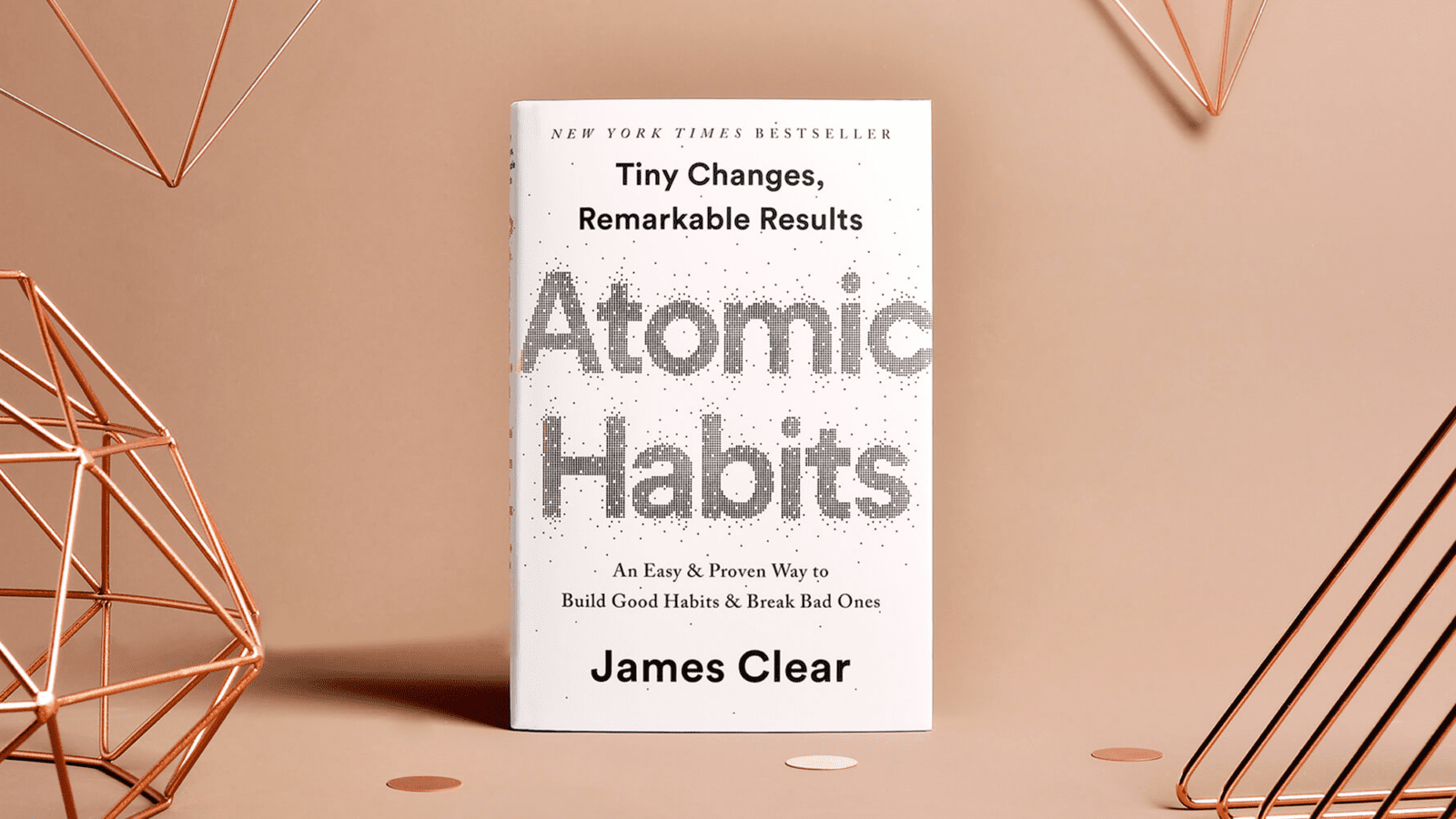
Atomic Habits + The Atomic Habits Workbook
James Clear
- What it's about
- James Clear’s Atomic Habits exists for a very specific kind of frustration: you know what you “should” do, you even feel motivated sometimes, but your life doesn’t reliably change. You make big plans, then reality returns—stress…
- Why read it next
James Clear's classic argues that you do not rise to the level of your goals, you fall to the level of your systems, and lays out a practical framework for designing environments and cues that make good behaviour the path of least resistance. It is the natural next step after Situated: where Duckworth zooms out to spaces, peers, mentors, and cultures, Clear zooms in to the daily mechanics of habit design, giving you the concrete tools to actually rebuild the situation she tells you to take seriously.