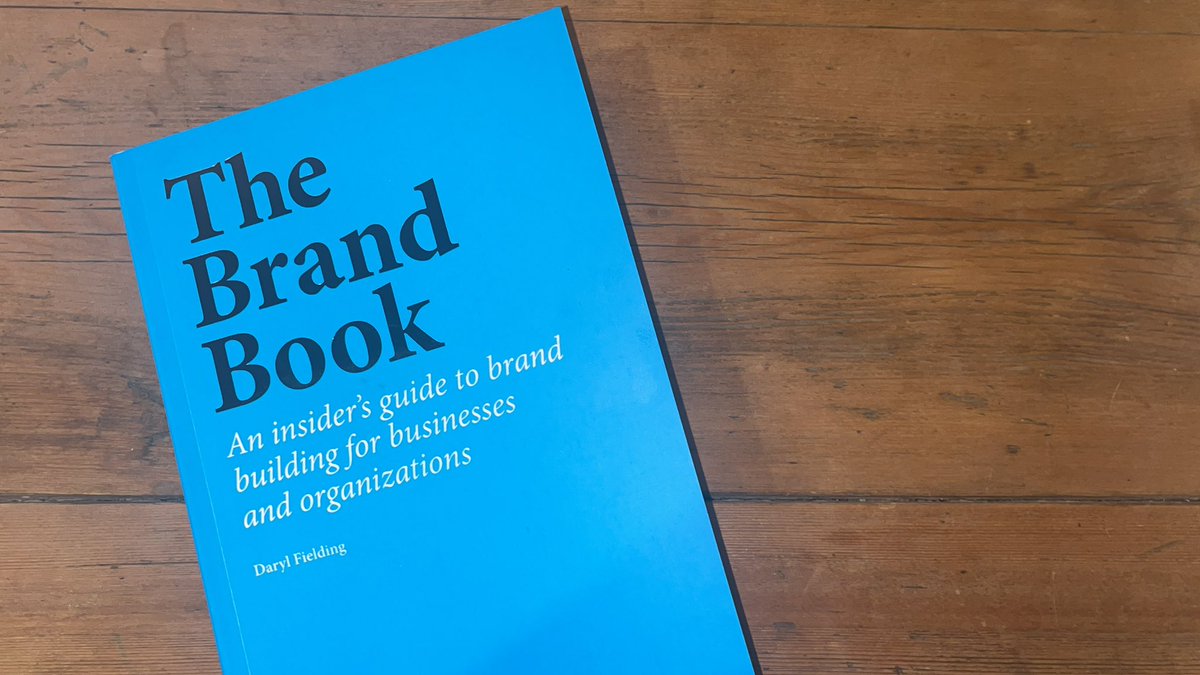
Why this book exists: branding is treated as decoration (and it costs you)
The Brand Book is written for people who know they “should” care about brand but don’t want to disappear into theory, jargon, or agency theatre. Daryl Fielding’s basic argument is refreshingly blunt: brand isn’t a logo, a colour palette, or an expensive campaign. It’s the set of expectations people carry about you—what they believe you stand for, what they trust you to do, and how they feel when they encounter you. When those expectations are unclear or inconsistent, everything gets harder: marketing becomes noisy, products feel interchangeable, talent drifts, and customers default to whatever is cheapest or most familiar.
Fielding’s goal is to give you a practical, no‑nonsense way to build and run a brand—whether you’re a founder, a marketer, a leader in a nonprofit, or someone inside a bigger organisation trying to bring order to chaos.
Who Daryl Fielding is (and why she’s so practical about this)
Fielding has held senior roles in marketing, media, and advertising, and is known for leading major brand work on household names (including campaigns and brand strategy work associated with brands like Dove, Cadbury, and Vodafone). She’s also closely involved in building marketing talent through The Marketing Academy Foundation. That background shapes the book’s voice: she’s seen branding done brilliantly, she’s seen it done badly, and she has little patience for mystique. Her writing has the feel of someone trying to help you avoid expensive, avoidable mistakes.
The big idea in one sentence
A strong brand is built by making clear choices about what you stand for, proving those choices through consistent experiences, and repeating that consistency long enough that people trust it.
The deeper problem: people confuse “brand” with “marketing”
A lot of organisations behave as if brand is what you add after the real work is done: once the product exists, you “wrap” it, name it, and promote it. Fielding flips that. She treats brand as an organising principle for the whole business. If your brand is clear, it makes decisions easier: what you build, how you talk, how you price, who you hire, how you behave under pressure. If your brand is fuzzy, decision‑making becomes political and reactive, and marketing becomes a desperate attempt to persuade people of something the organisation isn’t consistently demonstrating.
This is why she keeps pulling the reader back to fundamentals. “Brand building” isn’t a one‑off project; it’s a system. It’s a way of operating.
How the book “works”: a straightforward brand-building logic
Fielding’s approach is practical rather than academic. She’s less interested in giving you one grand model than in making sure you understand the handful of moving parts that always matter.
It starts with clarity. A brand needs a point of view: a simple answer to what you are here to do, for whom, and why you are worth choosing. Without that, every campaign is a different personality, every team tells a different story, and customers end up doing the work of trying to figure you out.
Then comes differentiation. Fielding pushes you to stop relying on generic claims (“quality,” “innovation,” “service”) and instead find what is meaningfully distinctive in your context. Differentiation isn’t about being weird; it’s about being specific enough that people can recognise you and remember you.
Finally comes consistency and proof. Brands are built in the gap between what you say and what people experience. If you promise “simple,” your onboarding can’t be confusing. If you claim “premium,” your customer service can’t feel transactional. If you talk about “human,” your policies can’t treat people like numbers. The book repeatedly returns to this idea: brands are earned through behaviour.
When you do need a crisp breakdown to anchor the work, the pieces can be thought of like this:
- Meaning: what you stand for (in plain words, not slogans).
- Distinctiveness: what makes you recognisably you.
- Experience: how you make people feel at key moments.
- Consistency: repetition across time and touchpoints.
- Proof: evidence through actions, product, service, and culture. (That list is not the book’s whole value; it’s just a convenient way to remember what Fielding keeps reinforcing in story after story.)
What you can do differently after reading it
Fielding’s most useful contribution is the way she demystifies brand work into decisions you can actually make.
You stop treating “brand” as a marketing output and start treating it as a leadership tool. That means you pay attention to internal alignment—because the fastest way to destroy brand clarity is to have leadership say one thing while teams experience another. It also means you get serious about focus. A brand that tries to be for everyone becomes bland. A brand that knows its audience and makes trade‑offs becomes powerful.
You also become more skeptical of activity. Fielding’s perspective implicitly asks: are we doing work that builds memory and trust, or are we doing work that creates noise? If your marketing is busy but your brand isn’t becoming clearer, the machine is producing motion, not progress.
The stories and examples (and why they matter)
The book uses real‑world examples and case studies (including well‑known campaigns) to make the fundamentals tangible. The point of the stories isn’t entertainment; it’s pattern recognition. Fielding wants you to see that successful brands aren’t usually built by a single clever advertisement. They’re built by organisations that repeatedly express a clear idea and then back it up with experiences people can feel.
A recurring lesson is that when a brand works, it reduces friction. People understand you faster. They trust you sooner. They forgive small mistakes because they have a coherent picture of who you are. When a brand doesn’t work, everything becomes a negotiation.
Notes, critiques, and caveats
Because Fielding is intentionally practical, readers looking for deep academic theory or a comprehensive survey of brand research may find the book light on citations. It’s more “field guide” than textbook.
Also, as with any branding book, the risk is turning ideas into surface-level messaging. Fielding’s work is most valuable when you take her central claim seriously: brand is proven by behaviour. If you only change your words, you haven’t really done brand building—you’ve done rephrasing.
Who should read this (and who shouldn’t)
Read this if you want a clear, jargon‑free explanation of what brand is and how to build it in the real world—especially if you’re in a small team, a fast‑moving company, or a mission‑driven organisation where you can’t afford to waste money on confusion.
If you already have a mature brand team and you’re looking for advanced frameworks, measurement models, or detailed brand architecture methodologies, this may feel more foundational than novel. But it’s still a useful “reset” book—especially for leaders who need to understand branding without outsourcing their thinking.
Resources (credible links)
What to read next
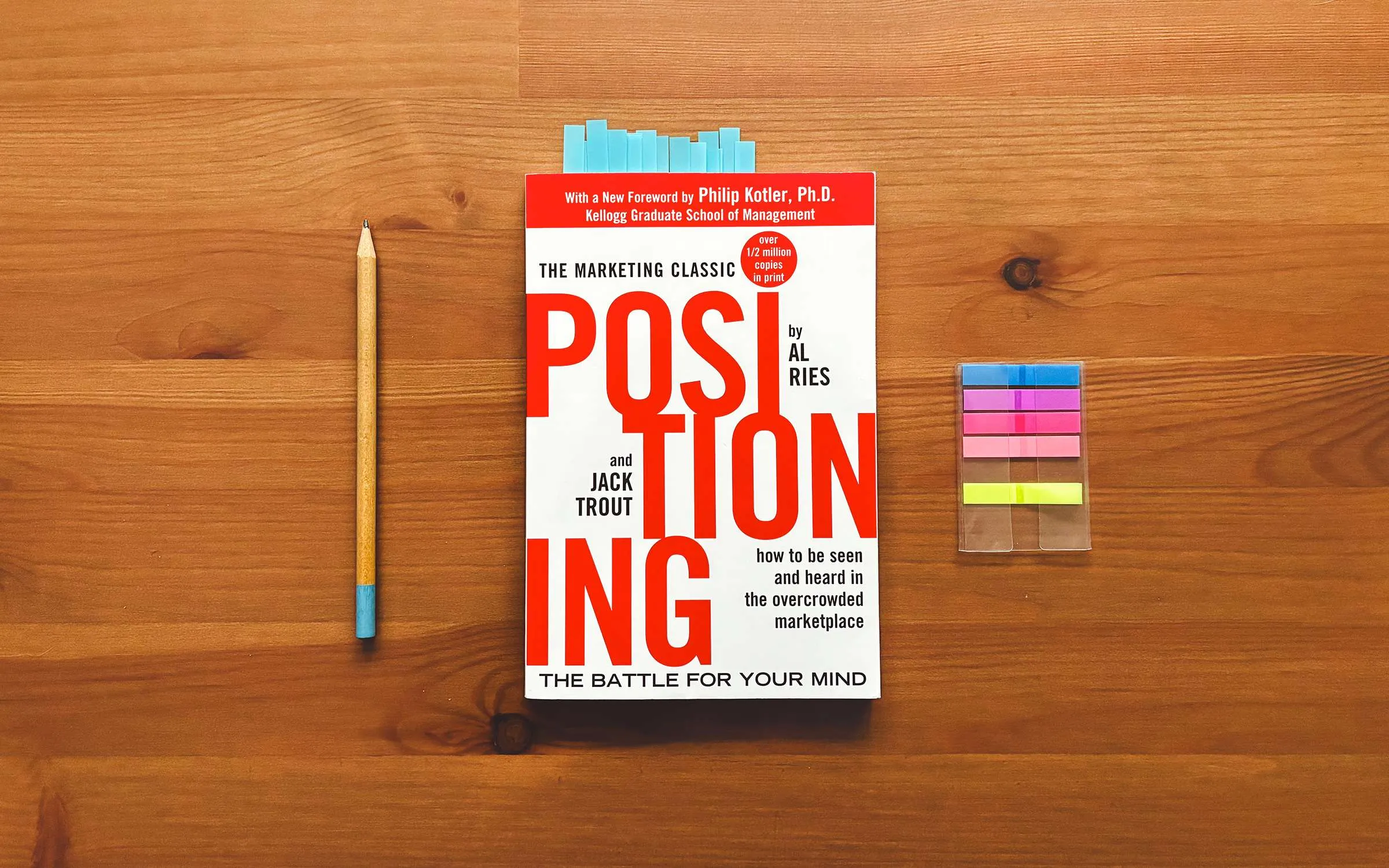
Summary · 8 min read
Positioning
The Battle for Your Mind
Al Ries; Jack Trout
- What it's about
- Ries and Trout wrote Positioning for a world where marketing was getting louder, not clearer. More products. More media. More “me too” brands. The average buyer has limited attention, so the mind protects itself by filtering most messages…
- Why read it next
Al Ries and Jack Trout's classic argues that brands win in the mind of the customer, by owning one clear, simple position rather than trying to be everything to everyone.
It is a strong next read because The Brand Book explains what a brand is and how it creates value, while Positioning gives you the sharpest single tool for deciding what your brand should stand for.