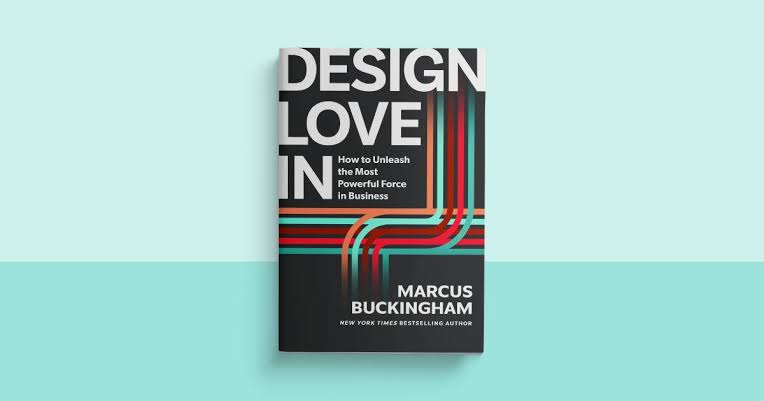
Marcus Buckingham’s Design Love In is a leadership book with a deliberately provocative claim: the most powerful force in business isn’t engagement, satisfaction, or motivation — it’s love. Published in 2026 by Harvard Business Review Press, the book argues that “love” can be defined clearly, measured through experience, and designed into the everyday interactions and systems of work.
Why this book exists
Most leaders want commitment, energy, and loyalty from their people and customers. But they reach for tools that often work only temporarily: perks, slogans, surveys, metrics, and performance pressure. Buckingham’s frustration is that we’ve built a whole leadership industry around managing outputs, while ignoring the inner experience that produces those outputs.
This book is trying to make the “soft” word love practical. Buckingham’s bet is that if leaders get serious about designing the right experiences, people will choose better behaviors — more effort, more care, more creativity, more resilience — because they feel deeply connected to the work and the people around them.
Why Marcus Buckingham’s perspective matters
Buckingham is best known as a researcher and writer in the strengths movement and workplace performance world. His earlier work (and public identity) sits in the “data-backed” leadership lane. That background matters here, because Design Love In is not written like a spiritual manifesto. It’s written like an attempt to give leaders a usable model: define the feeling, break it into components, and show what to do differently tomorrow morning.
The thesis in one sentence
When leaders intentionally design experiences that make people feel control, harmony, significance, warmth, and growth, they create love — and love reliably drives the behaviors that drive results.
The deeper problem the book is addressing
The real target isn’t “uncaring leaders.” It’s accidental leadership.
Buckingham argues that leaders are always making an experience — through meetings, decisions, feedback, tone, policies, and even silence. The question is whether those experiences are designed on purpose or left to drift. When they drift, people default to self-protection: they do the minimum, they disengage quietly, they stop caring, and they stop taking responsibility.
He also pushes back on the idea that leadership is mostly about traits or competencies. In this framing, leadership is closer to product design: you’re designing an experience that other humans will step into. And the experience is what determines whether people choose to bring their best.
The central framework: leaders as experience-makers
A simple line runs through the book:
People’s experiences create their feelings. Feelings drive their behaviors. Behaviors drive outcomes.
So if you want different outcomes, you don’t start by demanding different behaviors. You start by designing a different experience.
Buckingham defines “love” in a work context as: a deep and unwavering commitment to the flourishing of a human.[1]
He then breaks the experience of “love at work” into five feelings. These are the levers a leader can design for.
The five feelings that create love
- Control: I can see what good looks like, I have autonomy, and I’m not trapped in chaos.
- Harmony: I can do my work in a way that fits who I am, instead of performing a fake version of myself.
- Significance: What I do matters. Someone notices. It makes a difference.
- Warmth of others: I feel accepted, safe, and valued by real humans — not just evaluated.
- Growth: I’m becoming more capable and more myself. The future feels bigger than the present. The framework is powerful because it is felt. People can usually tell you immediately where love is missing: “I have no control,” or “No one cares,” or “I don’t feel safe here,” or “I’m not growing.” And once you name the missing feeling, you can design a better experience around it.
Practical ideas you can actually use
Buckingham’s approach is less about big cultural programs and more about repeated, everyday design choices.
Treat leadership touchpoints like design moments
Every touchpoint is a design surface: a 1:1, a Slack message, a meeting agenda, how you assign work, how you recognize progress, how you handle mistakes. If you change the experience at the touchpoints, you change the emotional trajectory of the week.
Aim for “extreme positive experiences,” not average ones
Buckingham argues that leaders often settle for “fine.” But love doesn’t come from “fine.” It comes from a consistent pattern of experiences that feel intentionally human. That doesn’t require grand gestures. It requires clarity, care, and repetition.
Diagnose the missing feeling before you prescribe a fix
A lot of leadership advice is generic: “communicate more,” “hold people accountable,” “be motivating.” Buckingham’s model forces a better diagnosis.
If performance is sagging, ask: which of the five feelings is being violated?
- If it’s control, simplify priorities, clarify outcomes, reduce chaos.
- If it’s significance, make impact visible and specific.
- If it’s warmth, increase safety and belonging, especially under pressure.
- If it’s growth, redesign the role so the person is stretching toward something. Even if you don’t adopt all the language, this diagnostic habit alone changes how you lead.
Make “love” measurable by measuring experience
A useful implication of the book is that “culture” becomes concrete when you translate it into experiences people can describe. You can ask better questions than “Are you engaged?” You can ask things like: “Where do you feel in control this week?” or “When did you feel significant?” and track whether the work environment is producing those feelings.
Essential narratives (and the lesson)
Rather than relying on one signature story, the book’s main narrative move is repeated: it treats leadership like experience design, and it treats love like the resulting emotional pattern.
One memorable image is Buckingham’s contrast between leaders who create energy and leaders who create withdrawal. When the experience is poorly designed, people become “ROAD warriors” — Retired While On Active Duty — physically present but emotionally gone.[1]
The lesson: disengagement is often not a personality problem. It’s an experience problem.
Notes, critiques, and caveats
The book is bold and practical, but the framing invites a few fair critiques:
- “Love” can feel culturally loaded. Some people will reject the word even if they like the ideas. The model may land better if you translate “love” into “human flourishing” or “deep commitment to people.”
- Risk of oversimplifying complex systems. The five feelings are a great lens, but real workplaces include structural constraints: pay, workload, discrimination, power dynamics, strategy failures. Experience design can’t replace fixing fundamentals — it should sit on top of them.
- Measurement can backfire if it becomes performative. If leaders turn “warmth” into a checkbox, people will feel manipulated. The model works best when it guides real choices, not when it becomes another survey-driven compliance exercise.
- Not every context can be made “loving” quickly. In high-pressure environments, the first wins may come from restoring control and growth. Warmth and harmony may take longer because trust takes time.
Who this book is for (and who it isn’t)
This book is a good fit if you:
-
Lead people (formally or informally) and want a clearer, more human way to drive performance
-
Feel skeptical of “engagement” language but still care deeply about what it’s trying to solve
-
Like frameworks that translate into daily leadership behaviors It may not be for you if you:
-
Want a rigorous academic treatment of love as a construct (this is more leadership-practical than scholarly)
-
Prefer leadership books that stay purely tactical and avoid moral language
Resources
What to read next
Summary · 5 min read
Dare To Lead
Brené Brown
- What it's about
- Dare to Lead exists because many organisations say they want “leaders,” but reward self-protection: pretending to know, avoiding hard conversations, managing perception, and staying safe. Brené Brown argues that this creates cultures of…
- Why read it next
Brown’s book is a practical guide to building brave cultures through vulnerability, clear values, and tough conversations. It complements Design Love In by showing how trust and courage get built when things are messy — which is often the real test of “warmth,” “significance,” and “growth” at work.